How 2756 N Pine Grove Chicago IL Shapes Multifamily Deal Value
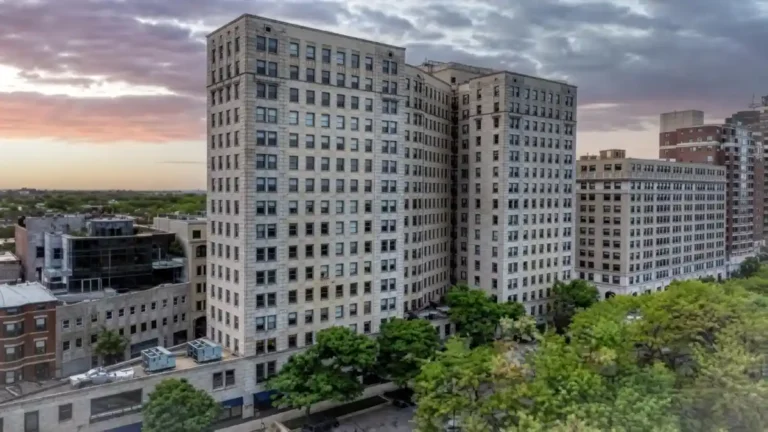
One vintage high-rise can teach a buyer more about Chicago multifamily pricing than a stack of market reports. 2756 N Pine Grove Chicago IL is a 130-unit, 11-story building from 1925 in the heart of Lincoln Park. It offers a clear case study in rent positioning, operating risk, and deal structure. If you plan to buy, sell, or finance an income property or a business tied to real estate on the North Side, the numbers here show how value really gets built.
Key Points
- Current asking rents start at about $2,025 for a one-bedroom and $2,911 for a two-bedroom. Both sit 21% to 27% below Lincoln Park averages, which signals either value-add room or a vintage-building discount.
- Value follows net operating income (NOI), not asking rent. Our illustrative model puts a 130-unit building like this between $30 million and $35.5 million across a 5.75% to 6.75% cap rate range.
- SBA loans do not finance passive apartment investments. Buyers of a building like this use agency, bank, or bridge debt, while SBA programs fit owner-occupied real estate and operating business acquisitions.
A note on scope: Chicagoland Business Broker does not represent this property, and no sale is implied. The valuation figures below are an educational underwriting exercise built from public listing data and stated assumptions.
2756 N Pine Grove at a Glance: Property Profile
The building is a classic pre-war Lincoln Park mid-rise. It was built in 1925, rises 11 stories, and holds 130 units. Planned Property Management (PPM), a North Side operator for decades, manages the community and markets it as 2756-60 N. Pine Grove.
Public listings for 2756 N Pine Grove Chicago IL describe one- and two-bedroom apartments with remodeled kitchens, designer plank flooring, and vintage crown molding. The building is smoke-free, has an elevator, and runs a 24/7 maintenance hotline.
| Property Fact | Detail |
|---|---|
| Address | 2756 N Pine Grove Ave, Chicago, IL 60614 |
| Marketing name | 2756-60 N. Pine Grove |
| Neighborhood | Lincoln Park (East Lakeview border) |
| County | Cook County |
| Year built | 1925 |
| Stories | 11 |
| Unit count | 130 |
| Unit types | 1 bed/1 bath and 2 bed/1 bath |
| Manager | Planned Property Management (PPM) |
| Lease term | 12 months |
| Parking | None on site; off-site options nearby |
| Laundry | Shared on-site laundry room |
| Pet policy | Dogs and cats, two-pet maximum, breed restrictions |
| School zone | Chicago Public Schools (Alcott College Prep, Lincoln Park High School) |
Building Amenities
| Amenity Category | Features Listed |
|---|---|
| Common areas | Lobby, fitness center, business center |
| Storage and logistics | Bike room, package receiving room |
| Building systems | Elevator, air conditioning, fiber optic internet |
| Resident services | Online maintenance requests, 24/7 hotline, resident events |
| Unit features (vary by unit) | Remodeled kitchens and baths, stainless appliances, granite counters, walk-in closets, separate dining rooms |
Building age is a value driver. A 1925 masonry structure carries charm that renters pay for, but it also carries capital expense risk in elevators, plumbing risers, and the facade. Any buyer should price both sides.
Pull the Cook County Assessor record for the PIN before you build any pro forma.
Unit Mix and Current Rent Pricing
Current pricing shows a two-tier rent structure. One-bedrooms list in the low $2,000s, and two-bedrooms list near $3,000. Listings for 2756 N Pine Grove Chicago IL show four available units with move-in dates between December 2026 and February 2027.
| Unit | Type | Sq Ft | Apartments.com Total Price | PPM Site Price | Available |
|---|---|---|---|---|---|
| 409 | 1 bed/1 bath | 610 | $2,025 | $2,019 | Feb 1, 2027 |
| 804 | 1 bed/1 bath | 630 | $2,093 | $2,087 | Dec 1, 2026 |
| 808 | 2 bed/1 bath | 770 | $2,911 | $2,905 | Dec 1, 2026 |
| 1008 | 2 bed/1 bath | 770 | $3,160 | $3,154 | Feb 1, 2027 |
The small gap between the two sources reflects required monthly fees. Apartments.com reports a total monthly price that includes the $5.48 utility billing fee, while the PPM site lists base rent. That six-dollar difference is a reminder to always ask which number a rent roll uses.
Floor Plan Ranges
| Floor Plan | Size Range | Starting Price | Layouts Offered |
|---|---|---|---|
| 1 bed/1 bath | 539 to 710 sq ft | $2,025 | 4 layouts |
| 2 bed/1 bath | 695 to 855 sq ft | $2,911 | 3 layouts |
Rent Per Square Foot
Rent per square foot is the monthly rent divided by unit size. It lets you compare units of different sizes on one scale.
| Unit | Monthly Rent | Sq Ft | Rent per Sq Ft (Monthly) | Rent per Sq Ft (Annual) |
|---|---|---|---|---|
| 409 (1BR) | $2,025 | 610 | $3.32 | $39.84 |
| 804 (1BR) | $2,093 | 630 | $3.32 | $39.87 |
| 808 (2BR) | $2,911 | 770 | $3.78 | $45.37 |
| 1008 (2BR) | $3,160 | 770 | $4.10 | $49.25 |
Two identical 770 sq ft two-bedrooms differ by $249 per month. That spread usually comes from floor height, views, and finish level. Higher floors in vintage towers often command the premium.
Fees and Utility Billing
The building uses a ratio utility billing system (RUBS), a method that splits building-wide utility costs among units by occupancy or unit size. For an investor, RUBS shifts expense back to tenants and raises effective NOI.
| Fee | Amount | Basis |
|---|---|---|
| Utility billing administrative fee | $5.48/mo | Per unit |
| Water | Varies | Number of occupants |
| Sewer and wastewater | Varies | Number of occupants |
| Gas | Varies | Unit size share |
| Stormwater fee | Varies | Split equally across units |
| Trash removal | Varies | Split equally across units |
| Electric | Varies | Billed directly by utility |
| Application fee | $75 | Per applicant |
| Move-in administrative fee | $300 to $400 | Per unit, by type |
| Pet fee | $25/yr (Apartments.com) or none (PPM site) | Per pet |
| Lost key and lock change | $150 | Per occurrence |
| Lockout assistance | $75 | Per occurrence |
| Renter’s insurance | Required, $40,000 minimum liability | Per resident |
Notice the pet fee conflict. PPM markets “no pet fees,” while Apartments.com lists a $25 annual registration fee paid to a third party. Diligence teams should reconcile every marketing claim against the actual lease addendum.
Request the RUBS allocation formula and 12 months of utility recovery data before you accept any “other income” figure.
How Rents Compare With Lincoln Park and Chicago
The building rents below the Lincoln Park average and close to the citywide average. That position tells you who the renter is and where the upside might sit. Our hands-on deal analysis suggests this gap is the single most important number on the page.
| Bedroom Type | 2756 N Pine Grove Starting Rent | Lincoln Park Average | Chicago Average | Gap vs. Lincoln Park | Gap vs. Chicago |
|---|---|---|---|---|---|
| 1 bedroom | $2,025 | $2,557 | $2,060 | -20.8% | -1.7% |
| 2 bedrooms | $2,911 | $3,993 | $2,574 | -27.1% | +13.1% |
| Studio | Not offered | $1,656 | $1,655 | N/A | N/A |
| 3 bedrooms | Not offered | $4,948 | $3,125 | N/A | N/A |
Nearby Rent Ranges for Similar Apartments
| Beds | Average Size | Lowest | Typical | Premium |
|---|---|---|---|---|
| Studio | 508 to 512 sq ft | $1,195 | $1,944 | $3,500 |
| 1 bed | 705 to 708 sq ft | $1,719 | $2,745 | $4,437 |
| 2 beds | 1,099 to 1,107 sq ft | $1,945 | $4,138 | $7,995 |
Size explains part of the gap. Typical nearby two-bedrooms run about 1,100 sq ft, while units here run 695 to 855 sq ft. A smaller unit with one bathroom and no in-unit laundry will rent below a newer, larger comp.
Nearby Competing Buildings
| Building | Distance | Bedrooms | Monthly Price Range |
|---|---|---|---|
| 3130 N. Lake Shore Drive | 0.4 mi | 1 to 2 | $2,468 to $3,216 |
| 1133 N. Dearborn | 2.1 mi | 1 to 2 | $2,091 to $4,065 |
| 1120 N. LaSalle | 2.1 mi | 1 to 2 | $2,318 to $3,628 |
| 100 W. Chestnut | 2.4 mi | 1 to 2 | $2,347 to $3,685 |
| 55 W. Chestnut | 2.5 mi | 1 to 2 | $2,154 to $3,323 |
The closest true comp, 3130 N. Lake Shore Drive, starts about $440 higher on one-bedrooms. That spread is the outline of a value-add thesis.
Build your rent comp grid on a price-per-square-foot basis, not a per-unit basis.
Location, Transit, and Demand Drivers
Location carries this property. A Walk Score of 94, eight bus lines at the door, and 14 minutes to downtown create steady renter demand. Transit access is the reason a no-parking building still leases.
| Location Metric | Score or Distance |
|---|---|
| Walk Score | 94 |
| Transit Score | 80 |
| Bike Score | 92 |
| Drive to downtown | 14 minutes |
| Brown and Purple Lines (Diversey) | 0.6 mi |
| Red Line (Belmont) | 0.8 to 0.9 mi |
| Bus routes | 76, 77, 151, 36, 143, 156, 134, 22 |
| O’Hare International | 15.3 mi |
| Midway International | 16.0 mi |
| Sound Score | 69 (active) |
Neighborhood Anchors
| Category | Anchor | Distance |
|---|---|---|
| Restaurant | The Breakfast House | Next door |
| Retail | The Century Shopping Centre | 0.2 to 0.3 mi |
| Retail | Broadway at Surf | 0.3 mi |
| Retail | Diversey-Halsted Shopping Center | 0.3 to 0.4 mi |
| Healthcare | Presence Saint Joseph Hospital | 0.4 mi |
| Healthcare | Advocate Illinois Masonic Medical Center | 0.7 mi |
| Culture | Notebaert Nature Museum | 0.6 mi |
| Recreation | Lincoln Park Zoo | 1.2 mi |
| Education | DePaul University, Lincoln Park | 1.3 mi |
| Lakefront | Diversey Harbor, Lakefront Trail | Short walk |
How 2756 N Pine Grove Chicago IL Shapes Multifamily Deal Value 2756 N Pine Grove Chicago IL breakdown: 1925 Lincoln Park building, 130 units, rents from $2,025, NOI, cap rates, deal… @PPMapartments @CrainsChicago @trdchicago https://t.co/ZYtwP7ACgl
— Chicagoland Business Broker (@chicagoland55) November 21, 2026
Who Rents Here
Apartments.com applies a 30% income rule: rent should not exceed 30% of gross income. That math sets a clear tenant profile.
| Unit Rent | Annual Rent | Income Needed at 30% Rule |
|---|---|---|
| $2,025 (1BR) | $24,300 | $81,000 |
| $2,093 (1BR) | $25,116 | $83,720 |
| $2,911 (2BR) | $34,932 | $116,440 |
| $3,160 (2BR) | $37,920 | $126,400 |
These are young professionals, hospital staff from Saint Joseph and Illinois Masonic, and graduate students. They spend locally, which matters to every business owner in 60614.
Map tenant employers from the rent roll to judge how stable demand will be through a downturn.
How to Value a Chicago IL Power Washing Business Opportunity Before You Buy
Lincoln Park Business and Investment Context
A dense residential building is a customer base for nearby businesses. Chicagoland dealmakers are noting that walkable apartment clusters in 60614 support higher valuations for service businesses within a few blocks.
The math is simple. 130 units at roughly 1.5 residents per unit puts about 195 people inside one address. Each household earns $81,000 or more, based on the income rule above.
| Business Type Near the Building | Why Density Helps | Valuation Effect We Observe |
|---|---|---|
| Breakfast and casual dining | Daily walk-in traffic | Steadier weekday sales, stronger SDE |
| Dental and medical practices | Insured professionals nearby, hospital proximity | Higher patient retention, better goodwill value |
| Dry cleaning and laundry | No in-unit laundry in many vintage buildings | Recurring revenue, lower customer churn |
| Fitness and wellness studios | Young professional demographic | Membership revenue supports multiples |
| Pet services | Pet-friendly buildings with no pet rent | Grooming and daycare demand |
| Parking operators | No on-site parking | High lot utilization |
| Property management firms | Many vintage buildings in one ZIP | Portfolio and contract value |
What This Means for Healthcare Practice Buyers
Our team has sold healthcare practices for more than 25 years. Patient density, insurance mix, and walkability drive goodwill in urban practices. A dental office within half a mile of 2756 N Pine Grove Chicago IL draws from hundreds of nearby households and two hospital workforces.
If you’ve been tracking Illinois business sales, this pattern won’t come as a surprise: practices in walkable lakefront ZIP codes hold value better than suburban strip-center locations with weaker foot traffic.
Count residential units within a half-mile radius when you evaluate any Lincoln Park storefront business.
Valuation Metrics: GRM, Cap Rate, and NOI
Multifamily value comes from income, not square footage. Three metrics do most of the work: gross rent multiplier (GRM), net operating income (NOI), and capitalization rate (cap rate).
| Metric | Definition | Formula | What It Tells You |
|---|---|---|---|
| Gross Potential Rent (GPR) | Rent if every unit leased at market | Units × monthly rent × 12 | Top-line ceiling |
| Effective Gross Income (EGI) | Income after vacancy plus other income | GPR − vacancy + other income | Realistic revenue |
| Net Operating Income (NOI) | Income after operating expenses, before debt | EGI − operating expenses | The number buyers pay for |
| Cap rate | Unlevered annual return | NOI ÷ price | Price of risk in the market |
| GRM | Price relative to gross rent | Price ÷ annual GPR | Quick screening tool |
| Price per unit | Value per apartment | Price ÷ units | Comparable sales check |
| DSCR | Debt service coverage ratio | NOI ÷ annual debt service | Lender’s safety margin |
Illustrative Pro Forma for a 130-Unit Building
We do not have the actual unit mix or rent roll. The model below assumes 78 one-bedrooms (60%) at an average of $2,050 and 52 two-bedrooms (40%) at $2,950, based on current asking rents. Treat every line as an assumption, not a fact about the property.
| Line Item | Assumption | Annual Amount |
|---|---|---|
| 1BR rent | 78 units × $2,050 × 12 | $1,918,800 |
| 2BR rent | 52 units × $2,950 × 12 | $1,840,800 |
| Gross Potential Rent | Sum | $3,759,600 |
| Vacancy and credit loss | 5% of GPR | ($187,980) |
| Other income | RUBS, fees, laundry at $90/unit/mo | $140,400 |
| Effective Gross Income | $3,712,020 | |
| Operating expenses | 45% of EGI (taxes, insurance, payroll, utilities, repairs, management) | ($1,670,409) |
| Net Operating Income | $2,041,611 |
Expense Breakdown We Use for Vintage Chicago Mid-Rises
| Expense Category | Typical Share of EGI | Notes for a 1925 Building |
|---|---|---|
| Real estate taxes | 15% to 20% | Cook County reassessments can move this sharply |
| Insurance | 4% to 7% | Older systems and masonry raise premiums |
| Repairs and maintenance | 6% to 9% | Elevators, risers, boilers |
| Payroll (engineer, staff) | 5% to 8% | On-site engineer is common |
| Utilities (net of RUBS) | 3% to 6% | Common areas and heat |
| Management fee | 3% to 5% | Third-party or affiliated |
| Reserves for replacement | $300 to $500 per unit/yr | Below the NOI line for some lenders |
Value at Different Cap Rates
| Cap Rate | Implied Value | Price per Unit | Implied GRM |
|---|---|---|---|
| 5.75% | $35,506,000 | $273,100 | 9.4 |
| 6.25% | $32,666,000 | $251,300 | 8.7 |
| 6.75% | $30,246,000 | $232,700 | 8.0 |
A one-point cap rate swing moves value by more than $5 million. That is why buyers and sellers argue about cap rates longer than any other term.
Value-Add Math
Value-add means raising NOI through renovations, better operations, or fee recovery. The table below shows what modest rent growth does to value at a 6.25% cap rate.
| Monthly Rent Increase per Unit | Added Annual NOI | Added Value at 6.25% Cap |
|---|---|---|
| $50 | $78,000 | $1,248,000 |
| $100 | $156,000 | $2,496,000 |
| $150 | $234,000 | $3,744,000 |
| $250 | $390,000 | $6,240,000 |
Closing even part of the $440 gap to 3130 N. Lake Shore Drive creates millions in value. Renovation cost per unit decides whether the math works.
Debt Coverage Check
Lenders size loans on DSCR. Most agency and bank lenders want 1.25x or higher on stabilized multifamily.
| Loan Assumption | Figure |
|---|---|
| Purchase price | $32,666,000 (6.25% cap) |
| Loan-to-value | 65% |
| Loan amount | $21,233,000 |
| Interest rate (illustrative) | 6.25% |
| Amortization | 30 years |
| Annual debt service | About $1,569,000 |
| DSCR | About 1.30x |
Run this same table with the real T-12 and a current lender quote before you sign a letter of intent.
What Drives Value Up or Down
Value moves on a short list of factors. Some help the building, and some hurt it. A buyer should price each one into the offer.
| Factor | Effect on Value | Why It Matters at This Property |
|---|---|---|
| Below-market rents | Upside | 21% to 27% below Lincoln Park averages |
| Walk Score of 94 | Upside | Supports occupancy without parking |
| RUBS utility recovery | Upside | Shifts expense to tenants |
| Pet-friendly, no pet rent | Mixed | Wider renter pool, lost fee income |
| 1925 construction | Risk | Capital needs in elevator, plumbing, facade |
| No in-unit laundry | Risk | Caps rent versus newer comps |
| No on-site parking | Risk | Limits some renter segments |
| One bathroom in 2BRs | Risk | Limits roommate pricing |
| Renter rating of 3.1 (8 reviews) | Risk and opportunity | Better operations can lift retention |
| Cook County tax exposure | Risk | Reassessments hit NOI directly |
Review Profile
| Rating | Count |
|---|---|
| 5 stars | 4 |
| 4 stars | 0 |
| 3 stars | 0 |
| 2 stars | 1 |
| 1 star | 3 |
A split review profile often points to inconsistent operations, not a weak location. Fixing service is cheaper than fixing a bad address.
Pros of a Building Like This
- Prime 60614 location with lake, park, and transit access
- Rent gap that supports a renovation plan
- Scale of 130 units spreads fixed costs
- Vintage character that renters seek out
- RUBS in place, so utility recovery is already established
Cons of a Building Like This
- Capital expenses in a 100-year-old structure
- Smaller units than modern comps
- No parking and shared laundry
- Property tax volatility in Cook County
- Chicago tenant ordinance compliance adds legal and administrative cost
Ask for the last five years of capital expenditure invoices to separate deferred maintenance from completed work.
Deal Structure: Asset Purchase vs. Entity Purchase
Deal structure decides what you inherit. An asset purchase buys the real estate and selected contracts. An entity purchase buys the LLC or corporation that owns the building, along with its history.
| Factor | Asset (Direct Real Estate) Purchase | Entity (LLC Interest) Purchase |
|---|---|---|
| What transfers | Deed, leases, selected contracts | Ownership of the entity holding title |
| Liability exposure | Lower; past liabilities stay with seller | Higher; known and unknown liabilities transfer |
| Tax basis | New basis, fresh depreciation schedule | Carryover basis, unless elections apply |
| Title insurance | Standard new owner’s policy | Non-imputation endorsement often needed |
| Loan treatment | New financing | Existing loan may need lender consent or assumption |
| Contracts and permits | Must be assigned | Generally stay in place |
| Transfer taxes | Apply to the deed | Chicago and Illinois may tax controlling-interest transfers |
| Due diligence scope | Property-focused | Property plus entity books, tax returns, litigation |
| Closing complexity | Moderate | Higher legal and accounting cost |
| Typical preference | Buyers | Sellers seeking simplicity or tax outcomes |
Chicago Transfer Tax Snapshot
Transfer taxes are a real closing cost on a property this size. Rates below reflect the long-standing schedule; confirm current rates with your attorney before closing.
| Tax | Rate | Typically Paid By | On a $32.67M Sale |
|---|---|---|---|
| Illinois state transfer tax | $0.50 per $500 | Seller | About $32,700 |
| Cook County transfer tax | $0.25 per $500 | Seller | About $16,300 |
| Chicago transfer tax | $3.75 per $500 | Buyer | About $245,000 |
| Chicago CTA portion | $1.50 per $500 | Seller | About $98,000 |
Deal Structuring Alternatives
- Seller financing: The seller carries a note for part of the price, which bridges valuation gaps.
- Loan assumption: The buyer takes over existing debt if the rate is below market and the lender agrees.
- 1031 exchange: A seller defers capital gains by buying replacement property within IRS deadlines.
- Earnout on NOI: Part of the price depends on hitting rent targets after closing.
- Joint venture: An operator partners with capital investors and splits returns by a waterfall.
Have your attorney and CPA model both structures side by side before you choose one in the letter of intent.
Financing Options, Including SBA
Financing a 130-unit apartment building is different from financing a business. The U.S. Small Business Administration treats passive real estate investment, including apartment buildings rented to tenants, as an ineligible business for its loan programs.
That rule shapes the capital stack. Agency lenders (Fannie Mae and Freddie Mac), banks, and bridge lenders fund buildings like this one. SBA loans fit operating businesses and owner-occupied commercial real estate nearby.
| Financing Type | Fits This Building? | Typical Use | Key Terms |
|---|---|---|---|
| Agency multifamily (Fannie Mae, Freddie Mac) | Yes | Stabilized 5+ unit buildings | Long-term fixed rates, DSCR-based sizing |
| Bank portfolio loan | Yes | Relationship borrowers | Shorter terms, recourse common |
| Bridge loan | Yes | Value-add renovation | Higher rates, interest-only, 2 to 3 years |
| CMBS | Yes | Larger stabilized assets | Non-recourse, strict prepayment terms |
| Seller financing | Yes | Gap filler | Negotiated rate and term |
| SBA 7(a) | No for apartments | Business acquisitions, owner-occupied real estate | Up to $5 million |
| SBA 504 | No for apartments | Owner-occupied commercial real estate and equipment | Fixed-rate long-term debt |
Where SBA Loans Do Fit in 60614
Our loan negotiation work in Lincoln Park focuses on businesses, not passive buildings. SBA programs apply when you buy an operating company or a building your company occupies.
| Lincoln Park Scenario | SBA Program | Owner-Occupancy Rule |
|---|---|---|
| Buy a dental practice near Illinois Masonic | 7(a) | Not required for business-only purchase |
| Buy a restaurant and its building | 7(a) or 504 | 51% occupancy for existing buildings |
| Buy a property management company | 7(a) | Business assets and goodwill |
| Buy a mixed-use building and occupy the storefront | 504 or 7(a) | Business must occupy at least 51% |
| Buy a 130-unit apartment building | Not eligible | Passive investment |
SBA Financing Guidelines for Business Buyers
- Confirm eligibility under SBA size standards and use-of-proceeds rules.
- Prepare an equity injection, commonly 10% of the project for change-of-ownership deals.
- Gather three years of business tax returns and a current interim statement.
- Order a business valuation that supports the price and goodwill.
- Submit a personal financial statement and resume showing industry experience.
- Negotiate seller note terms, since lenders may count standby seller debt toward equity.
- Close with a lender experienced in SBA acquisition loans.
Call an SBA-preferred lender with your business tax returns in hand before you make an offer on any 60614 business.
Illinois Licensing and the IDFPR
Licensing protects every party in a property deal. The Illinois Department of Financial and Professional Regulation, Division of Real Estate oversees the professionals who touch a transaction like this one.
Brokers who negotiate real estate sales in Illinois need a real estate license under the Real Estate License Act of 2000. When a business sale includes real property or a lease assignment, licensing becomes part of the conversation. Our team holds licensed real estate integration so business and property pieces close together.
| Profession Regulated by IDFPR Division of Real Estate | Role in a Multifamily or Business Deal |
|---|---|
| Real estate brokerage | Markets and negotiates the property sale |
| Real estate appraisal | Provides lender-required value opinions |
| Appraisal management companies | Coordinate appraisals for lenders |
| Home inspection | Inspects residential systems |
| Community association management | Manages condo associations, relevant to condo-listed units |
| Auction | Runs auction-based sales |
2026 Licensing Updates
| Update | Effective Date | What It Means |
|---|---|---|
| Endorsement process for out-of-state brokers | January 1, 2026 | Replaces the old state-by-state reciprocity process |
| Online fee payment through IDFPR ePay | June 4, 2024 | Paper application fees can be paid online |
| Updated online renewal portal | 2026 renewal cycle | Licensees renew through the IDFPR Online Services Portal |
Use the IDFPR License Lookup tool to verify any broker, appraiser, or inspector before you sign an engagement letter.
Chicago Compliance Items Buyers Must Review
A Chicago apartment building carries city-specific obligations. These rules affect operating cost, legal risk, and closing timelines. Skipping them is how good deals turn into lawsuits.
| Compliance Area | What to Review | Why It Matters |
|---|---|---|
| Chicago Residential Landlord and Tenant Ordinance (RLTO) | Lease forms, deposit handling | Penalties for deposit violations can be steep |
| Security deposit interest | Interest payments and records | Chicago requires interest on deposits held over six months |
| Fair Notice Ordinance | Non-renewal and rent increase notice periods | Notice length depends on tenancy duration |
| RUBS disclosures | Lease language on utility allocation | Unclear allocations create disputes |
| Exterior wall (facade) ordinance | Critical examination reports | Buildings over 80 feet face periodic inspection |
| Elevator inspections | City certificates | Required for operation |
| Building violations | City of Chicago violation search | Open violations transfer with the asset |
| Cook County tax appeals | Prior appeal history | Signals future tax direction |
Search the property address in the City of Chicago building violations database during your first week of diligence.
Buyer Strategy for a Lincoln Park Vintage Building
A strong buyer plan starts with real numbers and ends with a verified business plan. For a property like 2756 N Pine Grove Chicago IL, the gap between asking rent and in-place rent decides your returns.
Steps for Buyers
- Request the rent roll and T-12 (trailing 12-month operating statement).
- Compare in-place rents to current asking rents and nearby comps.
- Underwrite NOI with your own expense assumptions, not the seller’s.
- Inspect building systems with an engineer, focusing on elevator, boiler, and risers.
- Pull facade and violation records from the City of Chicago.
- Model property taxes at a post-sale reassessment level.
- Price the renovation plan per unit and test the rent lift.
- Secure a lender term sheet with DSCR and rate locked.
- Choose the deal structure with your attorney and CPA.
- Negotiate credits for deferred maintenance found in inspection.
Due Diligence Document Checklist
| Document | What You Learn | Red Flag |
|---|---|---|
| Rent roll | In-place rents, lease dates | Many leases expiring in one month |
| T-12 operating statement | Actual NOI | Expenses far below 40% of EGI |
| Utility bills and RUBS reports | Recovery rate | Recovery under 70% of cost |
| Capital expenditure history | Past investment | No major work in 10+ years |
| Property tax bills and appeals | Tax trend | Recent large increase |
| Insurance loss runs | Claims history | Repeated water claims |
| Service contracts | Ongoing obligations | Long, non-cancellable contracts |
| Leases and addenda | Fee terms, pet terms | Conflicts with marketing claims |
| Estoppel certificates | Tenant confirmations | Disputed rent or deposits |
Send your document request list the same day your letter of intent is signed.
Seller Strategy: Steps to Prepare for Sale
Sellers get paid for clean, provable income. Buyers discount anything they cannot verify. Our hands-on deal analysis suggests that organized books add more value than cosmetic updates.
Steps to Prepare for Sale
- Order a broker opinion of value or formal appraisal.
- Clean up the rent roll so it matches leases and bank deposits.
- Document RUBS recovery with 24 months of data.
- Resolve open city violations before marketing.
- Complete the facade report if one is due.
- Gather capital expenditure invoices to prove completed work.
- Review the Cook County assessment and file an appeal if justified.
- Reconcile marketing claims with lease terms, including pet fees.
- Decide on structure (asset or entity) with tax counsel.
- Plan your 1031 exchange if you want to defer capital gains.
Seller Value Levers
| Lever | Cost to Seller | Potential Value Effect |
|---|---|---|
| Lease up vacant units before sale | Low | Higher in-place NOI |
| Renovate turnover units | Moderate | Proves rent lift for buyers |
| Appeal property taxes | Low | Lower expense line |
| Fix open violations | Low to moderate | Removes buyer discount |
| Improve resident reviews | Low | Better perceived operations |
| Provide clean financials | Low | Faster closing, fewer re-trades |
Start your sale preparation 12 months before listing so a full year of clean numbers supports your price.
Buyer vs. Seller Responsibilities
Each side owns specific tasks. Clear roles keep a closing on schedule and reduce last-minute disputes.
| Task | Buyer | Seller |
|---|---|---|
| Provide rent roll, T-12, leases | Yes | |
| Order property inspection | Yes | |
| Order appraisal (lender) | Yes | |
| Deliver title commitment | Yes (commonly) | |
| Obtain tenant estoppels | Requests | Delivers |
| Secure financing | Yes | |
| Pay Chicago transfer tax (buyer portion) | Yes | |
| Pay state, county, and CTA transfer taxes | Yes | |
| Cure title defects | Yes | |
| Transfer security deposits with interest records | Receives | Delivers |
| Provide service contract list | Yes | |
| Notify tenants of new ownership | Yes, jointly | Yes, jointly |
Attach this responsibility table to your purchase agreement checklist so nothing falls between the parties.
Common Mistakes in Chicago Multifamily Deals
Most deal problems repeat. We see the same errors in business sales, practice sales, and property transactions across Cook, Lake, DuPage, and McHenry Counties.
- Underwriting asking rents instead of in-place rents. Asking rents show the market, not your income.
- Using the seller’s tax figure. A sale often triggers a higher assessment.
- Ignoring building age. A 1925 building needs a capital plan.
- Skipping RLTO review. Deposit errors can create large liabilities.
- Assuming SBA financing for apartments. Passive real estate is ineligible.
- Overlooking marketing conflicts. Pet fees and amenities vary between listings.
- Rushing the structure decision. Entity purchases carry hidden liabilities.
- Forgetting the condo question. One public listing describes a unit at the address as a condo, so confirm the legal ownership form.
Print this list and review it before every offer you submit.
How Chicagoland Business Broker Supports Your Deal
At Chicagoland Business Broker, we combine business brokerage, healthcare practice sales, and licensed real estate integration. That mix matters when a deal touches both a business and a building.
| Service | What We Do | What You Get |
|---|---|---|
| On-site business appraisals | Visit, review financials, analyze comps | A defensible value for buyers and lenders |
| Business sales | Market, screen buyers, negotiate | Qualified buyers and cleaner closings |
| Healthcare practice sales | 25+ years of practice transactions | Accurate goodwill and patient-base valuation |
| Loan negotiation support | Prepare lender packages, compare terms | Better financing terms |
| Real estate integration | Coordinate property and business pieces | One team, one timeline |
| Deal structuring | Model asset vs. entity outcomes | A structure that fits your tax and risk goals |
We serve Cook, Lake, DuPage, and McHenry Counties, including Lincoln Park and the full North Side. Our team has guided buyers and sellers for more than 15 years in business brokerage.
Schedule a confidential valuation call with our team to see where your business or property stands today.
FAQ
What is 2756 N Pine Grove Chicago IL?
It is a 130-unit, 11-story apartment building built in 1925 in Lincoln Park, ZIP 60614. Planned Property Management (PPM) manages it under the name 2756-60 N. Pine Grove.
How much is rent at the building?
Current listings show one-bedrooms from $2,025 and two-bedrooms from $2,911, with the top two-bedroom at $3,160. Prices change often, so check current listings.
Are utilities included?
No. The building bills water, sewer, gas, trash, and stormwater through utility allocation, plus a $5.48 monthly billing fee. Electric is billed directly by the utility.
Does the building have parking?
No. There is no on-site parking. Residents use off-site lots and street parking.
Is the building pet-friendly?
Yes. Dogs and cats are welcome with a two-pet maximum and breed restrictions. PPM advertises no pet fees, while Apartments.com lists a $25 annual registration fee.
What is a cap rate?
A cap rate is NOI divided by price. It shows the unlevered annual return a buyer earns on the purchase.
What could a building like this be worth?
Our illustrative model places a comparable 130-unit building between $30.2 million and $35.5 million at 5.75% to 6.75% cap rates. Actual value depends on the real rent roll and expenses.
Can I use an SBA loan to buy an apartment building?
No. The SBA treats passive residential rental property as ineligible. Use agency, bank, or bridge financing instead.
Which is better, an asset or entity purchase?
Asset purchases protect buyers from past liabilities and reset tax basis. Entity purchases can simplify contract transfers but carry more risk. Your attorney and CPA should model both.
Do I need a licensed broker for a deal involving real estate in Illinois?
Brokers who negotiate real estate sales in Illinois need a license from the IDFPR Division of Real Estate. Verify any broker through the IDFPR License Lookup.
How does a building like this affect nearby businesses?
Dense apartment buildings supply daily foot traffic and recurring customers. Restaurants, healthcare practices, and service businesses nearby often post steadier revenue.
Turn Property Data Into a Smarter Deal
2756 N Pine Grove Chicago IL shows how location, rent gaps, building age, and structure combine to set value. The lessons apply to any Chicago income property or real estate-linked business you plan to buy or sell.
- Value follows NOI, so verify in-place income and real expenses.
- Rent gaps signal upside only when renovation costs support them.
- Structure and financing change your risk as much as price does.
- Licensing and city compliance protect the deal at closing.
Contact Chicagoland Business Broker to book an on-site appraisal or a confidential deal review for your next Lincoln Park transaction.