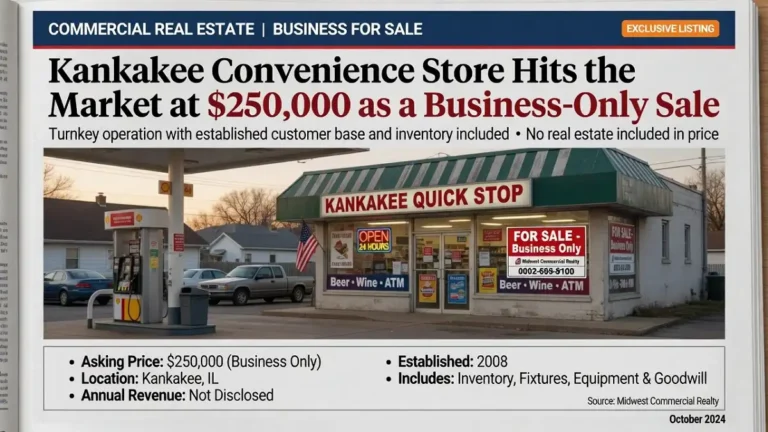
Commercial, Real Estate, News Is Reshaping, Business Valuations Across, Chicagoland, in 2026
If you own a business tied to a building in Cook, Lake, DuPage, or McHenry County, the property under your operation is now a bigger factor in your sale price than it was two years ago. The latest commercial real estate news shows tighter financing, uneven sector performance, and elevated borrowing costs. Each of these shifts changes what a buyer will pay and how a deal gets structured.
At Chicagoland Business Broker, we track these signals because they directly affect business valuations, financing terms, and deal timelines for the owners we represent.
This post breaks down the current market in tables, so you can read it quickly and act on it. We cover the macro picture, sector-by-sector fundamentals, SBA 7(a) financing, Illinois licensing changes, and how each shift moves your sale multiple.
Key Takeaways
- Elevated rates and yields above 4% are compressing valuations for real-estate-heavy businesses, while cash-flow-strong operations hold value better.
- Sector matters: retail and industrial fundamentals stay firmer than office, which changes buyer appetite for the property attached to your business.
- SBA 7(a) loans up to $5 million remain a practical path for buyers acquiring both a business and its real estate.
Business Broker in Rawlins, WY: What Buyers and Sellers Must Know in 2026
Macro Snapshot: What the Numbers Mean for Your Deal
Economic momentum softened through early 2026. According to the NAR March 2026 Commercial Real Estate Market Insights report, inflation held at 2.4%, the Federal Reserve kept policy unchanged, and long-term yields stayed above 4%. Financing conditions remain tight.
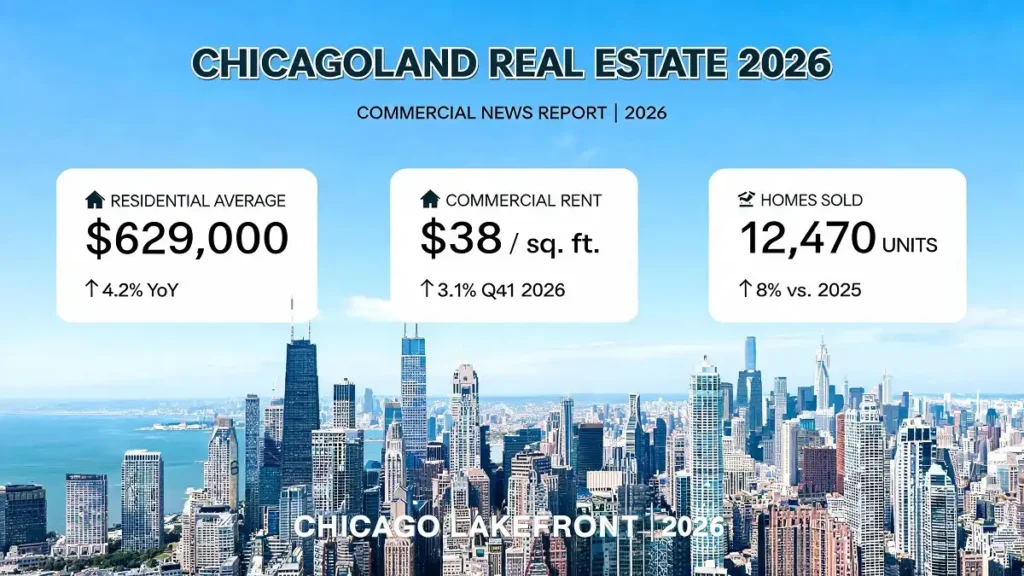
That combination keeps buyer debt expensive and puts downward pressure on prices for deals that lean heavily on real estate.
| Macro Factor | Current Reading | Effect on Business Deals |
|---|---|---|
| Inflation | 2.4% (holding) | Stable input costs, easing pressure ahead |
| Fed policy | Rates unchanged after late-2025 cuts | Financing costs stay elevated |
| Long-term yields | Above 4% | Higher cap rates, lower property values |
| GDP growth | Slowed in Q4 2025 | More cautious buyer underwriting |
Our hands-on deal analysis suggests buyers are underwriting more conservatively. That means clean financials and predictable cash flow carry more weight now than the building alone.
Sector-by-Sector: Where Buyer Appetite Sits Today
The property type attached to your business changes how easily it sells and finances. Retail remains the tightest sector. Office stays fragile. Industrial is normalizing.
These distinctions matter because a buyer’s lender values each differently.
| Sector | Vacancy | Rent Trend | Buyer Opportunity (2026) |
|---|---|---|---|
| Retail | Low | Outperforming | Strong |
| Industrial | Elevated | Cooling | Moderate to Strong |
| Multifamily | Elevated | Subdued | Moderate |
| Office | High | Flat, heavy concessions | Cautious |
| Hotel | Occupancy ~62.2% | ADR/RevPAR above 2019 | Selective |
If your business occupies retail or industrial space, expect firmer buyer interest. If it sits in office space, expect more questions on lease terms and buildout costs.
Mini takeaway: Know your sector before you list. It sets realistic price expectations.
Business Broker in Evanston for Illinois Buyers and Sellers
SBA 7(a) Financing: The Buyer’s Practical Path
Most Chicagoland deals that combine a business and its real estate run through an SBA 7(a) loan. Per the U.S. Small Business Administration, these loans can fund acquiring, refinancing, or improving real estate and buildings, plus a change of ownership.
| Feature | Detail |
|---|---|
| Maximum loan amount | $5,000,000 |
| Eligible use for CRE | Acquire, refinance, or improve real estate and buildings |
| Ownership change | Complete or partial change of ownership allowed |
| Guarantee (WCP line) | 85% for $150,000 or less; 75% above $150,000 |
| Rate cap example ($350,001+) | Base rate + 3.0% |
Financing is often the gate that decides whether a deal closes on time. We help sellers package financials, leases, and appraisals so a buyer’s 7(a) application moves without avoidable delays.
Illinois Licensing Update: What Changed in 2026
Real estate integration in Illinois runs through the Illinois Department of Financial and Professional Regulation.
Two 2026 changes affect brokers and out-of-state buyers working here.
| Item | 2026 Change | Who It Affects |
|---|---|---|
| Endorsement process | Replaces reciprocal process, effective Jan 1, 2026 | Brokers/Managing Brokers from outside Illinois |
| Renewal process | Updated online renewal via IDFPR Portal | All current Illinois licensees |
| Online fee payment | ePay available for paper applications | Applicants and licensees |
This matters if your buyer is relocating from another state. Licensing timing can affect how quickly a real-estate-linked deal proceeds.
Deal Structure: Asset Purchase vs. Stock Purchase
When real estate is part of the sale, structure drives tax exposure and liability. Chicagoland dealmakers are noting that most transactions with property still favor asset purchases.
| Factor | Asset Purchase | Stock Purchase |
|---|---|---|
| What transfers | Selected assets and real estate | Entire entity, including liabilities |
| Buyer liability | Limited to acquired assets | Assumes existing liabilities |
| Tax basis | Stepped-up for buyer | Carries over |
| Common use | Most SMB deals with real estate | Licenses/contracts hard to reassign |
| Seller preference | Often less favorable on tax | Often cleaner exit |
We review each structure against your tax position and the buyer’s financing before recommending a path.
Valuation Impact: How Sector Shifts Move Your Multiple
Property fundamentals feed directly into your sale multiple. A strong-sector building can support the deal. A weak-sector building may require concessions.
| CRE Sector | Directional Effect on Business Sale Multiple |
|---|---|
| Retail (tight) | Supports or holds multiple |
| Industrial (normalizing) | Neutral to slightly supportive |
| Multifamily (soft) | Neutral |
| Office (fragile) | May pressure multiple downward |
| Hotel (mixed) | Depends on ADR/RevPAR strength |
Mini takeaway: Cash flow still leads valuation, but the property either reinforces or drags on it.
Action Steps for Sellers
- Order a business appraisal that accounts for both cash flow and real estate.
- Organize financials for the trailing three years.
- Document lease terms or ownership clearly for the property.
- Address deferred maintenance that a buyer’s lender may flag.
- Clarify structure preference early with tax counsel.
Action Steps for Buyers
- Get pre-qualified for an SBA 7(a) loan before touring deals.
- Confirm sector fundamentals for the property type you’re buying.
- Underwrite conservatively given yields above 4%.
- Verify Illinois licensing timing if relocating from out of state.
- Compare asset vs. stock structure with your advisors.
How to Buy a Gas Station for Sale in Chicago
FAQs
Does current commercial real estate news lower every business valuation?
No. It affects real-estate-heavy deals more. Strong cash flow in a tight sector like retail can still hold value.
Can one SBA 7(a) loan cover both the business and the building?
Yes. A 7(a) loan up to $5 million can fund a change of ownership and the real estate together, subject to lender approval.
Why do most Chicagoland deals use asset purchases?
They limit buyer liability and provide a stepped-up tax basis. Stock purchases are used mainly when licenses or contracts are hard to reassign.
How does the office sector affect my sale if I lease office space?
Buyers scrutinize office lease terms and buildout costs more closely, which can slow negotiations.
Where This Leaves You
The market in mid-2026 rewards preparation. Elevated yields, mixed sector performance, and tighter financing mean your property either strengthens your deal or requires a plan to offset it. Retail and industrial fundamentals help buyers commit. Office space calls for clearer lease documentation and realistic pricing. SBA 7(a) financing remains a workable path when your financials are organized and the appraisal supports the ask.
If you’re weighing a sale or acquisition, the next step is a grounded valuation that reflects both your cash flow and your real estate. Tell us where your business stands, what the property looks like, and what you want the transaction to accomplish. We’ll assess the current picture and lay out a realistic path forward.