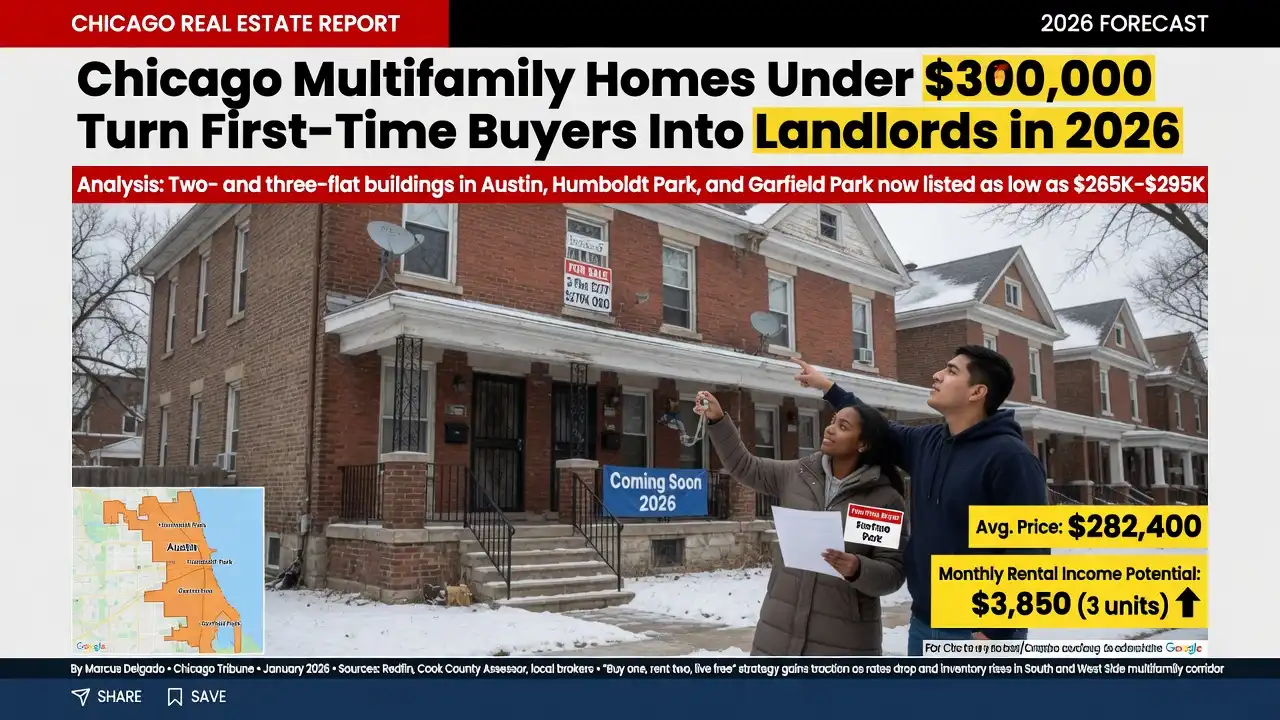
Chicago Multifamily Homes Under $300,000 Turn First-Time Buyers Into Landlords in 2026
Buying Chicago multifamily homes under $300,000 is one of the smartest moves a first-time buyer can make right now, because you get a place to live and a rent check under the same roof. As of August 2026, Homes.com lists 399+ multifamily properties under $300K across the city, and the math on these two-to-four unit buildings has never looked better for owner-occupants.
So what does this mean for you? If you live in one unit and rent the others, your tenants help cover the mortgage, and you build equity while someone else pays down your loan.
At Chicagoland Business Broker, we treat every income property like a small business acquisition. Our team observed that buyers who understand the financing rules and run the rent numbers first close faster and negotiate harder. This post gives you the market data, the loan options, and the action steps in plain language.
Check Also: Costco Rival Launches Megastore Trend Impacts Business Valuation and M&A Strategy in Illinois
Key Takeaways
- Inventory is strong. Chicago had 399+ multifamily listings under $300,000 in August 2026, concentrated on the South and West Sides.
- 5% down is a game-changer. Fannie Mae now allows 5% down on owner-occupied 2–4 unit homes, down from the old 15%–25% requirement.
- Rental income offsets your payment. In many two-flats, tenant rent covers 50% or more of the monthly mortgage. Always run the full income-and-expense picture first.
The 2026 Chicago Multifamily Market Snapshot
The affordable end of the market moves fast. Buyer leverage improved slightly in mid-2026, but well-priced two-flats and three-flats still draw multiple offers.
| Metric | Value (Aug 2026) | Trend |
|---|---|---|
| Chicago multifamily listings under $300K | 399+ | Steady |
| Most common unit type | 2-flat / 3-flat | Stable demand |
| Typical price range in tier | $180K–$299K | Firm |
| Minimum down (owner-occupied, conventional) | 5% | Lowered from 15%–25% |
| Best value zones | South & West Sides | High activity |
If you have tracked Chicago income property before, this affordable pocket won’t surprise you. The city stays a landlord-friendly market for buy-and-hold investors and house hackers alike.
Where the Sub-$300K Inventory Actually Lives
Chicago multifamily homes under $300,000 cluster in specific neighborhoods. Our hands-on deal analysis points to the South and West Sides for the most units per dollar, while transitional areas offer upside for patient owners.
| Area | Typical Building | Price Range | What You Get |
|---|---|---|---|
| South Shore / Chatham | 2–3 flat | $180K–$280K | Larger units, strong rental demand |
| Auburn Gresham / Englewood | 2-flat | $120K–$230K | Lowest entry, higher upside |
| Humboldt Park / Garfield Park | 2–3 flat | $200K–$299K | Transit access, appreciation potential |
| Belmont Cragin / Portage Park | 2-flat | $250K–$299K | Family-friendly, steady tenants |
| Roseland / Pullman | 2–4 unit | $130K–$250K | Space, commuter rail, cash flow |
Neighborhood choice drives everything: rent levels, tenant quality, and financing ease all shift by location. Location remains the single biggest lever on your long-term return.
Check Also: Lugano Diamonds and Jewelry Filed for Chapter 11 Bankruptcy
Financing Chicago Multifamily Homes Under $300,000
This is where house hackers win or lose. A two-to-four unit property you live in unlocks the best loan terms available, and the rules got friendlier in 2026.
The 5% Down Breakthrough
Fannie Mae now lets you buy an owner-occupied 2–4 unit home with just 5% down, a major drop from the old 15%–25% floor. You live in one unit, rent the rest, and future rental income can count toward qualifying in many cases. Review the details on the Fannie Mae 5% down multifamily page before you apply.
The Main Loan Paths
| Loan Type | Min. Down (2–4 Unit) | Occupancy Rule | Best For |
|---|---|---|---|
| Fannie Mae Conventional | 5% | Must live in one unit | Owner-occupants, first-timers |
| FHA | 3.5% | Must live in one unit | Lower credit, small down payment |
| Conventional Investment | 15%–25% | No occupancy needed | Pure investors |
| Cash | 100% | None | Speed, distressed buildings |
FHA loans stay a strong path, and loan ceilings vary by county. Check current limits on the HUD FHA mortgage limits tool for Cook County before shopping.
Financing Red Flags to Check First
- Illegal or unpermitted units that lenders won’t count
- Deferred maintenance that fails FHA appraisal standards
- Vacant units with no rent history
- Zoning issues that limit legal unit count
- Mixed-use space that complicates underwriting
Confirm the legal unit count in writing before you fall for a listing.
Rental Income Math: The Number That Makes the Deal
A $280,000 three-flat that rents two units for $1,300 each behaves very differently from a $250,000 two-flat with one $1,100 rental. This is where Chicagoland dealmakers separate a cash-flow winner from a money pit.
| Scenario | Price | Your Unit | Rental Income | Est. Monthly Payment* | Net Out-of-Pocket |
|---|---|---|---|---|---|
| Three-flat | $280,000 | Live in 1 | $2,600 (2 units) | ~$2,400 | Positive / near zero |
| Two-flat | $250,000 | Live in 1 | $1,300 (1 unit) | ~$2,150 | ~$850 |
| Two-flat | $199,000 | Live in 1 | $1,150 (1 unit) | ~$1,750 | ~$600 |
*Estimates include principal, interest, taxes, and insurance; figures vary by rate and taxes.
Always request the rent roll, lease copies, and 12 months of utility bills. These documents show whether the income is real or wishful. Verify actual rents, not the seller’s projections.
Your Step-by-Step Buyer Action Plan
- Get pre-approved with a lender who handles 2–4 unit owner-occupied loans.
- Set your true budget, including taxes, insurance, and a repair reserve.
- Target 2–3 neighborhoods that fit your commute and rent goals.
- Confirm the legal unit count and zoning before you offer.
- Review the rent roll and leases line by line.
- Inspect the unit and building systems, roof, and mechanicals.
- Underwrite the deal as if the rent must cover the loan.
- Negotiate with repair and vacancy risk in mind, then close.
Pros and Cons of Buying in This Price Tier
| Pros | Cons |
|---|---|
| Rent offsets your mortgage | Landlord duties and tenant management |
| Just 5% down for owner-occupants | Older buildings need repairs |
| Builds equity and cash flow | Vacancy risk between tenants |
| Strong Chicago rental demand | Property taxes can be high |
| Path to a larger portfolio later | Financing hinges on legal units |
Buyer vs. Seller Responsibilities
| Task | Buyer | Seller |
|---|---|---|
| Loan pre-approval | ✅ | — |
| Provide rent roll and leases | — | ✅ |
| Order inspection | ✅ | — |
| Disclose known defects | — | ✅ |
| Confirm legal unit count | ✅ (with city) | Supports |
| Deliver clear title | — | ✅ |
| Fund earnest money | ✅ | — |
FAQs
Are Chicago multifamily homes under $300,000 a good investment in 2026?
Yes, in the right building. Owner-occupied two-to-four unit properties with legal units and steady rents offer strong cash flow and equity growth.
How much do I need to put down?
As little as 5% down with Fannie Mae or 3.5% with FHA, as long as you live in one unit.
Can rental income help me qualify?
Often, yes. Lenders may count a portion of projected or actual rents toward your qualifying income on 2–4 unit properties.
Where are the best deals right now?
South Shore, Chatham, Auburn Gresham, Humboldt Park, and Roseland consistently offer the most Chicago multifamily homes under $300,000.
What extra costs should I budget beyond the price?
Plan for property taxes, insurance, maintenance, a vacancy cushion, and a reserve for repairs on older buildings.
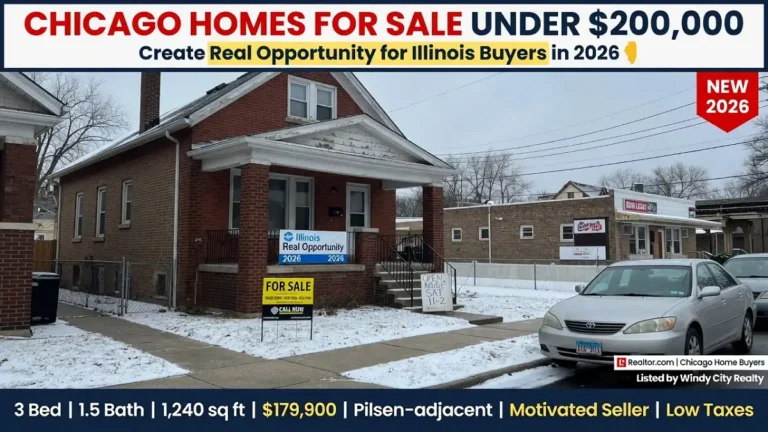
Related Also: Chicago Homes for Sale Under $200,000 Create Real Opportunity for Illinois Buyers in 2026
The Bottom Line
The affordable multifamily market rewards preparation over speed. Buyers who verify legal units, study the rent roll, and lock in 5%-down financing walk away with a home that pays for itself.
At Chicagoland Business Broker, we underwrite every Chicago multifamily homes under $300,000 deal like a business: check the books, confirm the income, and close with confidence. The inventory is out there for August 2026, and with the right plan, it can be yours.
Ready to make your move? Reach out to our team for a hands-on review of your next deal.