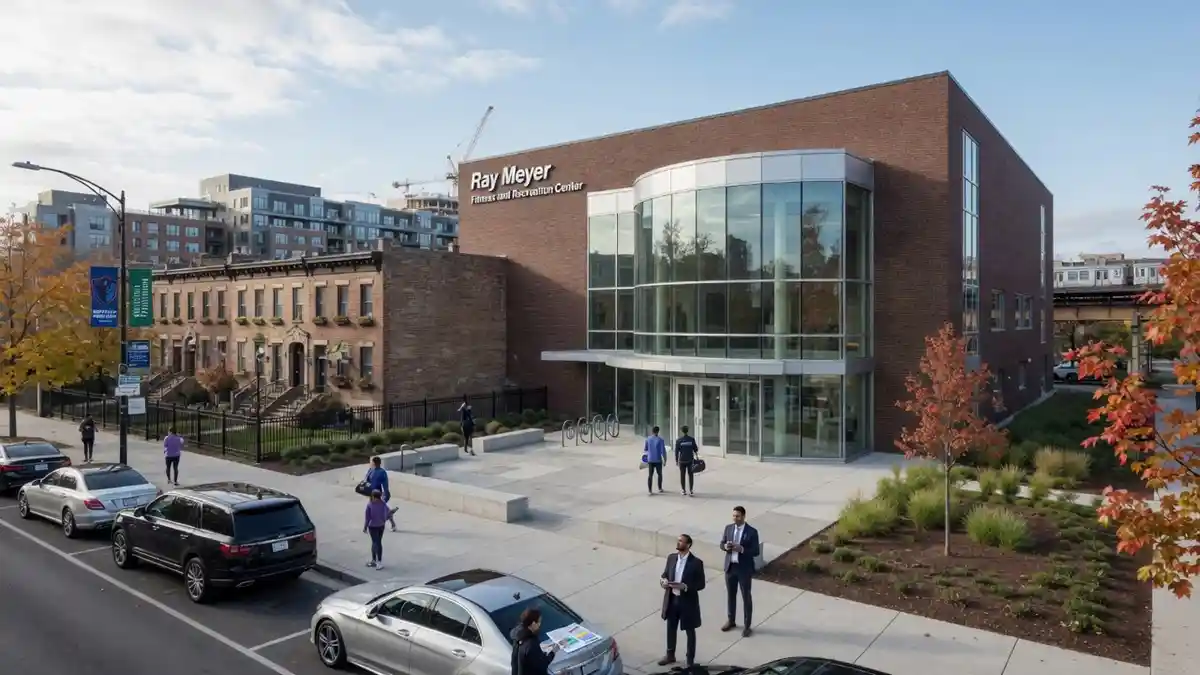
Ray Meyer Fitness and Recreation Center Chicago IL Shapes Business Valuation and Investment Strategy in Lincoln Park
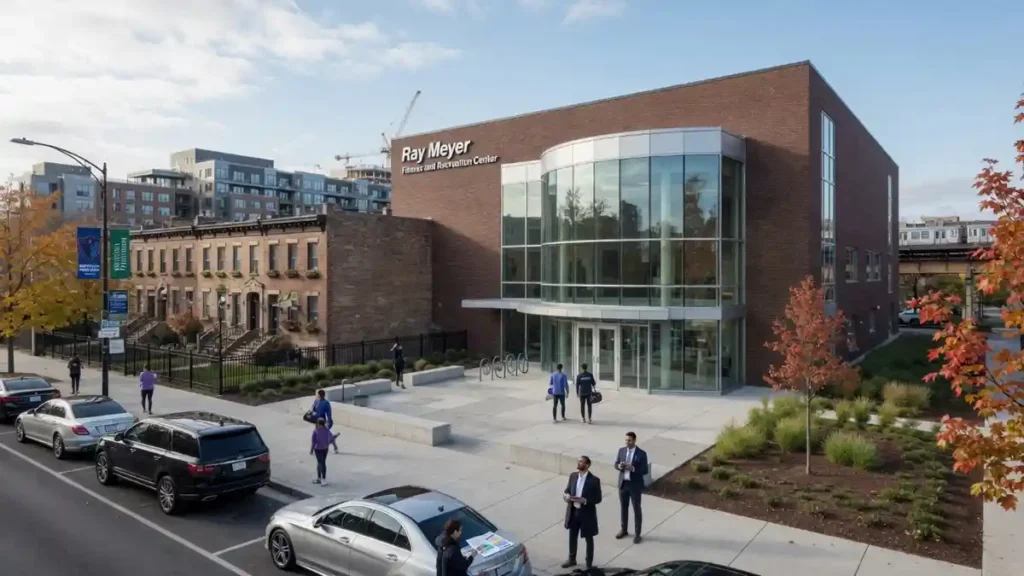
A university-anchored fitness facility does one thing that free-standing gyms rarely match: it stabilizes foot traffic. The Ray Meyer Fitness and Recreation Center Chicago IL, sitting at 2235 N. Sheffield Ave in Lincoln Park, draws a steady flow of students, alumni, faculty, and community members year-round.
For anyone buying, selling, or appraising a fitness or recreation business in Cook County, that kind of demand anchor changes the math. It sets a benchmark that nearby operators get measured against, and it shapes how we price deals across the neighborhood.
Key Takeaways
- A 120,000-square-foot, four-story facility tied to DePaul University creates a demand floor that lifts valuation confidence for nearby fitness businesses.
- University-anchored recreation centers carry different risk profiles than private gyms, which directly affects multiples, financing, and deal structure.
- Buyers targeting fitness acquisitions in Lincoln Park should model membership durability and program depth before touching a purchase price.
108 North State Street Chicago for Illinois Business Buyers and Sellers
What the Ray Meyer Fitness and Recreation Center Chicago IL Actually Offers
The Ray Meyer Fitness and Recreation Center is a 120,000-square-foot recreation complex that opened in 1999 and serves DePaul University’s Lincoln Park community. Named after DePaul’s legendary basketball coach, “The Ray” spreads four stories of equipment and programming across one of Chicago’s densest residential neighborhoods. According to DePaul University Campus Recreation, the building holds more than 185 pieces of equipment plus a full slate of specialty programming.
Here is what sits inside the walls.
| Facility Feature | Specification |
|---|---|
| Total size | 120,000 sq ft, four stories |
| Opened | 1999 |
| Address | 2235 N. Sheffield Ave, Chicago, IL 60614 |
| Swimming pool | 25-yard, six-lane |
| Indoor track | 1/8-mile banked |
| Gymnasium | Four-court |
| Racquetball courts | Three full-size |
| Equipment | 185+ pieces, 12,000+ sq ft of cardio and free weights |
| Café | The Bean Café with seating area |
| Contact | (773) 325-4555 |
That mix matters for valuation. A facility this size with a pool, a banked track, and multi-court capacity carries high fixed operating costs but also broad revenue potential. When we appraise nearby operators, we treat The Ray as the amenity ceiling in the market.

Programs That Drive Recurring Engagement
The Ray runs 55+ group fitness classes each week, which is the kind of programming depth that keeps members active and reduces churn. Program variety is a leading indicator of retention, and retention is what buyers pay for.
- 55+ weekly group fitness classes, free to members
- Specialty fitness: Aerial Fitness, Pilates Reformer, Women on Weights
- Personal training and nutrition workshops
- Swim lessons and pickleball clinics
- Self-defense classes, club sports, and intramural sports
| Program Category | Format | Business Value Signal |
|---|---|---|
| Group fitness | 55+ classes weekly | Retention driver, low marginal cost |
| Specialty (Reformer, Aerial) | Discounted member rate | Premium upsell revenue |
| Personal training | One-on-one | High-margin recurring income |
| Swim lessons | Youth and adult | Family-household lock-in |
| Pickleball clinics | Court-based | Fastest-growing racquet segment |
Program depth is the single clearest proxy for a fitness business’s earning durability.
Membership Tiers and Why They Matter to a Buyer
Membership structure at The Ray is tiered by community relationship, and that structure is exactly what an appraiser reconstructs when valuing any membership business. As the Lincoln Park Chamber of Commerce notes, The Ray serves students, alumni, faculty, staff, and the surrounding neighborhood.
| Membership Segment | Access | Revenue Characteristic |
|---|---|---|
| Students | Included with enrollment | Stable, enrollment-linked base |
| Alumni | Discounted rate | Loyal, lower-churn cohort |
| Faculty/Staff | Discounted rate | Consistent payroll-adjacent billing |
| Community | Standard rate | Market-rate, growth lever |
The lesson for buyers is simple. Diversified membership tiers reduce single-source risk. A private gym leaning on one demographic prices lower than one with a layered base. When we model a target, we score each tier for durability before we agree on a multiple.
How University-Anchored Facilities Shape Business Valuation
University-anchored fitness facilities change the risk profile of an entire micro-market. Our hands-on deal analysis suggests that operators within a mile of The Ray benefit from elevated fitness demand density while also competing against a heavily subsidized amenity. Both effects show up in the numbers.
Here are the valuation metrics we apply to fitness and recreation businesses in Cook County.
| Valuation Metric | Typical Range (SMB Fitness) | What Moves It |
|---|---|---|
| SDE multiple | 1.5x – 3.0x | Retention, lease terms, staff depth |
| EBITDA multiple | 3.0x – 5.0x | Scale, recurring revenue mix |
| Revenue multiple | 0.7x – 1.5x | Membership stability, brand equity |
| Member churn rate | 25% – 45% annual | Program variety, service quality |
| Revenue per member | $600 – $1,400/yr | Upsells, personal training, specialty |
Key idea: proximity to a demand anchor like The Ray lifts confidence in the retention assumption, and retention is the assumption that drives the multiple. Chicagoland dealmakers are noting that Lincoln Park fitness assets with clean membership data command tighter, more defensible pricing.
Ray Meyer Fitness and Recreation Center Chicago IL Shapes Business Valuation and Investment Strategy in Lincoln Park
— Chicagoland Business Broker (@chicagoland55) September 16, 2026
The Ray Meyer Fitness and Recreation Center Chicago IL, sitting at 2235…@DePaulU @LincolnParkHS @chicago https://t.co/dgROib1cRH
Competitor Benchmark: The Ray vs. Chicago Athletic Clubs West Loop
Comparing a university facility to a private club sharpens the point. The Chicago Athletic Clubs West Loop location operates as a private, membership-fee gym inside a seven-location network. The Ray operates as a subsidized institutional amenity. Different models, different valuation logic.
| Factor | Ray Meyer (DePaul) | CAC West Loop |
|---|---|---|
| Ownership model | University-anchored | Private club network |
| Primary members | Students, alumni, staff, community | Fee-paying local residents |
| Revenue base | Enrollment-linked + community | Membership fees + training |
| Facility size | 120,000 sq ft | Full-service, multi-amenity |
| Valuation driver | Institutional stability | Fee growth, network scale |
| Buyer relevance | Market benchmark | Direct acquisition target |
A private club is buyable; a university facility is not. But the university facility still sets the amenity expectation buyers underwrite against.
Deal Structuring for Fitness Acquisitions in Cook County
Structuring a fitness acquisition comes down to how you allocate risk between buyer and seller. Most Cook County fitness deals close as asset purchases, and understanding why protects both sides.
| Structure | Asset Purchase | Stock Purchase |
|---|---|---|
| What transfers | Selected assets, not liabilities | Entire legal entity |
| Buyer liability exposure | Lower | Higher (inherits history) |
| Tax treatment | Stepped-up asset basis | Carryover basis |
| Membership contracts | Reassigned | Stay with entity |
| Common in fitness deals | Most common | Less common |
Buyer vs. Seller Responsibilities
| Responsibility | Buyer | Seller |
|---|---|---|
| Due diligence | Lead | Provide records |
| Membership data verification | Review | Disclose fully |
| Lease assignment | Negotiate | Facilitate landlord consent |
| Equipment condition | Inspect | Warrant working order |
| Financing | Secure | Assist with transition |
| Staff transition | Plan retention | Introduce and support |
Deal Structuring Alternatives
- Straight asset purchase with cash at close
- Seller financing covering 10% to 25% of price
- Earnout tied to retained membership counts
- Equipment lease assumption to lower upfront cash
- Real estate carve-out when the seller owns the building
SBA Financing for Fitness and Recreation Businesses
SBA financing is often the cleanest path to funding a fitness acquisition. The SBA 7(a) loan program supports business purchases, equipment, and working capital, and lenders review the U.S. Small Business Administration guidelines when structuring these deals.
Steps to prepare a fitness business for sale:
- Clean up membership records so recurring revenue is provable.
- Separate personal and business expenses to show true earnings.
- Document equipment age and condition with a fixed-asset schedule.
- Secure the lease or confirm assignability with the landlord.
- Compile three years of financials plus year-to-date statements.
- Systematize operations so the business runs without the owner.
Pros and cons of SBA-backed fitness acquisitions:
- Pro: Lower down payment, often 10% to 15%
- Pro: Longer repayment terms ease cash flow
- Con: Documentation load is heavy
- Con: Equipment-heavy businesses face closer collateral scrutiny
If you’ve been tracking Illinois business sales, this financing pattern won’t surprise you: well-documented membership revenue is what gets fitness deals approved.
Frequently Asked Questions
Is the Ray Meyer Fitness and Recreation Center Chicago IL open to the public?
The facility primarily serves DePaul students, alumni, faculty, and staff, with community membership options. It is not a business available for acquisition, but it functions as a market benchmark for nearby fitness operators.
How does a facility like The Ray affect nearby gym valuations?
It raises local fitness demand density and sets the amenity standard, which strengthens the retention assumptions we use to price nearby fitness businesses.
What multiple do fitness businesses sell for in Cook County?
Most small-to-medium fitness businesses trade at 1.5x to 3.0x SDE or 3.0x to 5.0x EBITDA, depending on membership stability and lease terms.
Can I use an SBA loan to buy a fitness business in Chicago?
Yes. The SBA 7(a) program is commonly used for fitness acquisitions when membership revenue and financials are well documented.
Asset or stock purchase for a gym acquisition?
Most fitness deals close as asset purchases to limit the buyer’s exposure to historical liabilities.
Harry Potter Shop Chicago Michigan Avenue Chicago il
Your Next Step
The Ray Meyer Fitness and Recreation Center Chicago IL is more than a Lincoln Park landmark. It is a valuation reference point that shapes how we price, structure, and finance fitness deals across Cook, Lake, DuPage, and McHenry Counties. If you are weighing a fitness or recreation acquisition near this demand anchor, start with a professional membership-revenue analysis before you name a number.



4 Comments