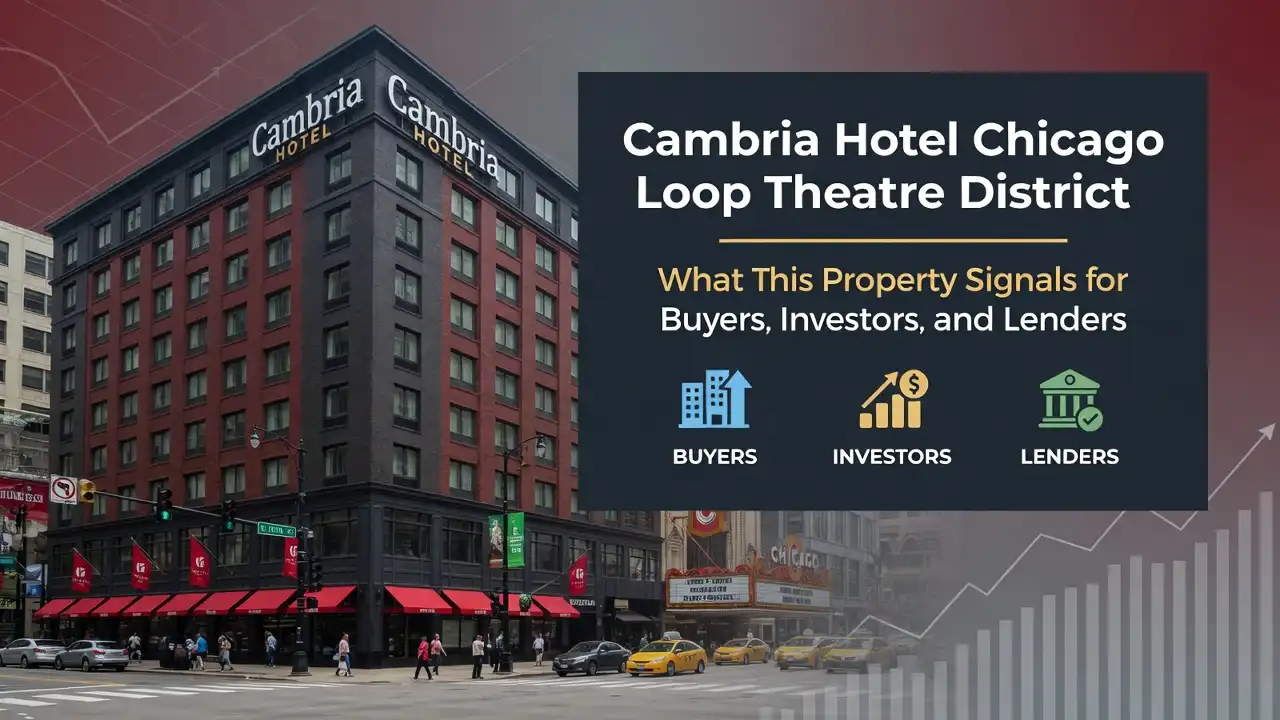
Cambria Hotel Chicago Loop Theatre District: What This Property Signals for Buyers, Investors, and Lenders
The cambria hotel chicago loop theatre district sits at 32 W. Randolph St., Chicago, IL 60601, and it is exactly the kind of asset that teaches you how downtown hospitality really trades. At Chicagoland Business Broker, we look past the marketing photos and read the operating story underneath.
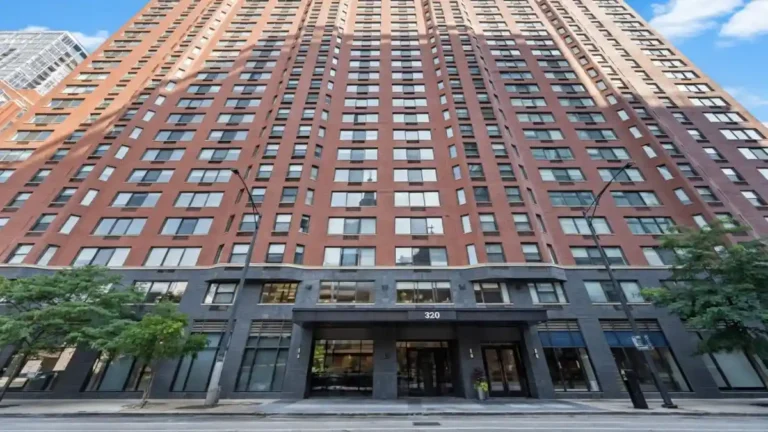
This is a 199-room, 22-floor property, an adaptive reuse of a 1927 building positioned above the historic Oriental Theatre area. If you have been tracking Illinois business sales, this kind of location-anchored hotel will not surprise you as a durable asset with real complexity.
Key Takeaways
- Location drives most of the value here. Walkable proximity to the Chicago Theatre, Millennium Park, and transit gives this hotel pricing power that many suburban assets simply cannot match.
- Pricing is volatile by date, not broken. Public rate snapshots swing from roughly $153 member rates to several hundred dollars on peak dates, which tells you demand is event-driven.
- Hospitality deals live and die on cash flow and management. Our hands-on deal analysis suggests underwriting depends far more on net operating performance than on the pretty lobby.
Check Also: 108 North State Street Chicago for Illinois Business Buyers and Sellers
Why Location Is the Core Asset
The property’s address puts guests inside Chicago’s busiest walking corridor. Chicago dealmakers are noting that transit access and attraction density are the two levers that keep occupancy resilient. The confirmed nearby demand generators do the heavy lifting here.
| Demand Generator | Distance (Public Listings) | Why It Matters to Value |
|---|---|---|
| Chicago Theatre | About 2-minute walk | Steady event-night room demand |
| Chicago Riverwalk | 3 to 4-minute walk | Leisure and weekend traffic |
| Millennium Park | About 5-minute walk | Year-round tourist draw |
| Michigan Avenue | About 3-minute walk | Shopping and business travel |
| State Street | Minutes away | Retail and foot traffic |
| Lake and Washington Stations | 2 to 3-minute walk | Commuter and transit convenience |
A hotel you can walk to from a train platform carries a built-in occupancy floor. That floor is what lenders quietly love.
The Operating Profile
The Cambria runs a full-service style footprint for its size. On-site dining at Intermission Bar and Kitchen, a bar, a fitness center, a game room, and meeting space of 2,036 square feet give the property multiple revenue lines. Check-in is 4 PM and check-out is 11 AM, with a minimum check-in age of 21. Pets are not allowed except service animals, and offsite parking runs about $57 per night nearby.
| Operating Element | Detail (Public Sources) | Revenue or Cost Signal |
|---|---|---|
| Rooms | 199 across 22 floors | Scale supports fixed-cost absorption |
| Food and beverage | Intermission restaurant and bar | Secondary revenue and guest capture |
| Meeting space | 2,036 sq ft | Group and corporate booking upside |
| Parking | Offsite, about $57/night | Guest friction and lost ancillary revenue |
| Fitness and game room | On-site | Amenity value, low direct revenue |
Pricing Signals and Demand Volatility
Public room-rate snapshots from September 2026 show how sharply rates move by date. This is not instability. It is event-driven pricing. Read the calendar, not the headline rate.
| Room Type / Snapshot | Approx. Public Rate | What It Suggests |
|---|---|---|
| Member standard king | About $153/night | Base demand floor |
| Queen room | About $158/night | Modest premium |
| Deluxe king | About $168/night | Larger-room upsell working |
| Deluxe two queen | About $177/night | Family and group demand |
| One listing nightly / total | About $194 nightly, $231 total | Taxes and fees add up fast |
| Peak aggregator dates | Several hundred per night | Compression on high-demand days |
Buyers should model the trough, not the peak. The spread between weekday base rates and peak event nights is the real revenue engine.
Check Also: How 875 N Michigan Ave Chicago Illinois Shapes Business Valuation and Deal Strategy on the Magnificent Mile
The Fee Layer Buyers Must Understand
Effective May 1, 2026, a 1.5 percent Chicago Tourism Improvement District charge applies to qualifying stays under 30 days on the room rate. This matters for pricing transparency and perceived value.
Guests see it as a separate line item, and net perceived value drops when fees stack on top of a rate. Any buyer should factor city-mandated charges into competitive positioning.
Valuation: What Actually Moves the Number
Our hands-on deal analysis suggests hotel value in this segment is a blend of real estate, brand affiliation, and operating cash flow. Each driver pushes marketability and financing in a different direction.
| Value Driver | Impact on Marketability | Impact on Financing |
|---|---|---|
| Prime Loop location | Strong positive | Improves collateral view |
| Brand flag (Cambria/Choice) | Positive, adds distribution | Lenders favor recognized flags |
| Meeting and F&B revenue | Positive, diversifies income | Supports debt coverage |
| Parking friction | Slight negative | Minor underwriting concern |
| Rate volatility | Neutral to positive | Requires conservative modeling |
| Deferred maintenance risk | Negative | Can trigger reserve requirements |
Guest sentiment feeds directly into this table. Public review snapshots show strong location and cleanliness scores, alongside friction around housekeeping scheduling, parking, and occasional service inconsistency. Reputation is a valuation input, not a soft metric.
Deal Structure: Asset Versus Entity Purchase
Structure decides who inherits what. In hospitality, this choice carries real weight.
| Consideration | Asset Purchase | Entity / Stock Purchase |
|---|---|---|
| Liability exposure | Lower for buyer | Higher, buyer inherits history |
| Tax basis step-up | Usually available | Generally not |
| Contracts and permits | Often reassigned | Typically transfer intact |
| Franchise agreement | Requires new approval | May continue, subject to consent |
| Liquor license | Reapplication likely | May stay with entity |
| Complexity | Cleaner for buyer | Faster on some transfers |
Most lower-middle-market buyers lean toward asset deals for liability protection. Sellers often prefer entity sales for tax reasons. That tension is where a broker earns the fee.
Risk Matrix
| Risk | Likelihood | Severity | Mitigation |
|---|---|---|---|
| Demand seasonality | High | Medium | Diversify group and corporate bookings |
| Fee-driven price resistance | Medium | Medium | Transparent rate communication |
| Parking inconvenience | High | Low | Negotiate garage partnerships |
| Service inconsistency | Medium | Medium | Staff training and standards |
| Franchise re-approval | Medium | High | Early brand engagement in diligence |
| Deferred capital needs | Medium | High | Reserve study before close |
Buyer Diligence Checklist
| Diligence Area | What to Verify |
|---|---|
| Financials | 3 years of P&L, STR reports, occupancy and ADR |
| Franchise | Agreement terms, PIP obligations, transfer consent |
| Real estate | Title, survey, building condition, 1927 structure needs |
| Contracts | F&B, parking, service vendors, union status |
| Licenses | Liquor, business, health permits |
| Fees and taxes | CTID charge, city assessments, hotel tax |
| Reputation | Review trends across booking platforms |
Seller Preparation Steps
- Clean up the financials and separate owner add-backs clearly.
- Document meeting and F&B revenue as distinct income streams.
- Address visible friction points, especially housekeeping and service gaps.
- Confirm franchise standing and any pending property improvement plans.
- Prepare a reserve and capital summary so buyers are not surprised.
- Package the location story with real occupancy and rate data.
Pros and Cons at a Glance
Pros
- Elite walkable location with transit and attractions.
- Recognized brand flag and distribution.
- Multiple revenue lines from rooms, F&B, and meetings.
- Strong cleanliness and location sentiment in reviews.
Cons
- Offsite parking friction for drive-in guests.
- Fee stacking that pressures perceived value.
- Service consistency gaps noted in feedback.
- Older 1927 building with potential capital needs.
Check Also: 8213 West Summerdale Avenue: Chicago Property History & 2026 Value
What This Means for Illinois Business Buyers and Sellers
Buyers should treat this property as an operating business first and real estate second. The cambria hotel chicago loop theatre district shows how location can carry occupancy while management determines profit. Sellers should package proof, not promises. A well-documented rate and occupancy story shortens the path to a serious offer.
Financing and the Lender View
SBA-backed lending can support qualifying smaller hospitality deals, though larger full-service hotels often move through conventional or specialized lenders. Hospitality underwriting is highly cash-flow and management dependent. Lenders scrutinize debt service coverage, brand strength, and reserve adequacy. We make no financing promises here, because terms hinge on the specific borrower and the specific numbers. A conservative pro forma opens more doors than an optimistic one.
Why Brokers and Lower-Middle-Market Investors Should Care
Even as a hotel topic, the cambria hotel chicago loop theatre district is a clean lesson in deal mechanics. Hospitality blends real estate, an operating business, and franchise structure in one transaction. Chicagoland dealmakers are noting that the same principles carry into healthcare practices, service businesses, and multi-location operators. Master the hotel deal and you understand most of the lower-middle-market playbook.
FAQ
Is the cambria hotel chicago loop theatre district a good acquisition target?
It depends on cash flow, franchise terms, and capital needs. The location is a genuine strength, but the numbers decide the deal.
What makes the cambria hotel chicago loop theatre district location valuable?
Walkable access to the Chicago Theatre, Millennium Park, Michigan Avenue, and transit stations. Proximity supports a durable occupancy base.
Why do room rates swing so much?
Demand is event-driven. Peak nights compress inventory while weekdays sit near a base floor.
How does the CTID fee affect value?
The 1.5 percent charge adds to guest cost and can pressure perceived value, so factor it into competitive pricing.
Asset or entity purchase for a hotel like this?
Most buyers prefer asset deals for liability protection, though sellers often favor entity structures for tax reasons.
Conclusion
The cambria hotel chicago loop theatre district is a practical case study in how location, brand, and operations combine into value.
Read the calendar, model the trough, and verify the fees. At Chicagoland Business Broker, we help buyers and sellers turn that read into a clean, financeable deal.
Pricing, fees, and operations can change and should be verified during diligence.

6 Comments