
How 4 Surprising Factors That Can Affect a Home Appraisal Impact Your Deal in Illinois
Your buyer is ready, the contract is signed, and then the appraisal comes in low. Deals stall, financing shrinks, and everyone at the table starts sweating. The truth is that appraised value rarely turns on square footage alone. Some of the 4 surprising factors that can affect a home appraisal are hiding in plain sight, and they can swing your number by thousands.
At Chicagoland Business Broker, our team has watched clean deals wobble over details sellers never saw coming. Here is what actually moves the needle.
Key Takeaways
- Location quirks, neighbors, and even street noise can shift an appraisal as much as the home itself, so context matters as much as condition.
- Cosmetic issues and deferred maintenance signal risk to an appraiser, and small fixes often return more than they cost.
- Timing, comparable sales, and market momentum drive the final number, so a well-timed listing protects your value.
Why the Appraisal Number Rules Your Deal
An appraisal is the lender’s reality check. It confirms the home is worth what the buyer agreed to pay. When the number comes in short, the buyer must cover the gap in cash, renegotiate the price, or walk away.
As Mortgage Mark explains, the appraisal protects the lender’s collateral, not the seller’s asking price. That single distinction reshapes how you should prepare.
Our team observed the same pattern across Cook, Lake, DuPage, and McHenry Counties. Sellers who understand the 4 surprising factors that can affect a home appraisal prepare smarter and negotiate from strength.
Factor 1: Location Details You Cannot Change
Two identical homes can appraise very differently based on what surrounds them. Appraisers weigh proximity to busy roads, power lines, commercial zoning, and even the view from the back window.
According to Amerisave, external factors outside your lot line still land inside your valuation.
| Location Factor | Typical Effect on Value | Seller Control |
|---|---|---|
| Busy road frontage | Down 5% to 15% | None |
| Adjacent commercial use | Down 3% to 10% | None |
| Power lines or towers | Down 2% to 8% | None |
| Cul-de-sac or park view | Up 3% to 8% | None |
| Strong school zone | Up 5% to 12% | None |
You cannot move the house, but you can document the upsides. Highlight a quiet street, a walkable block, or a top-rated school district before the appraiser arrives.
Factor 2: Your Neighbors and the Block
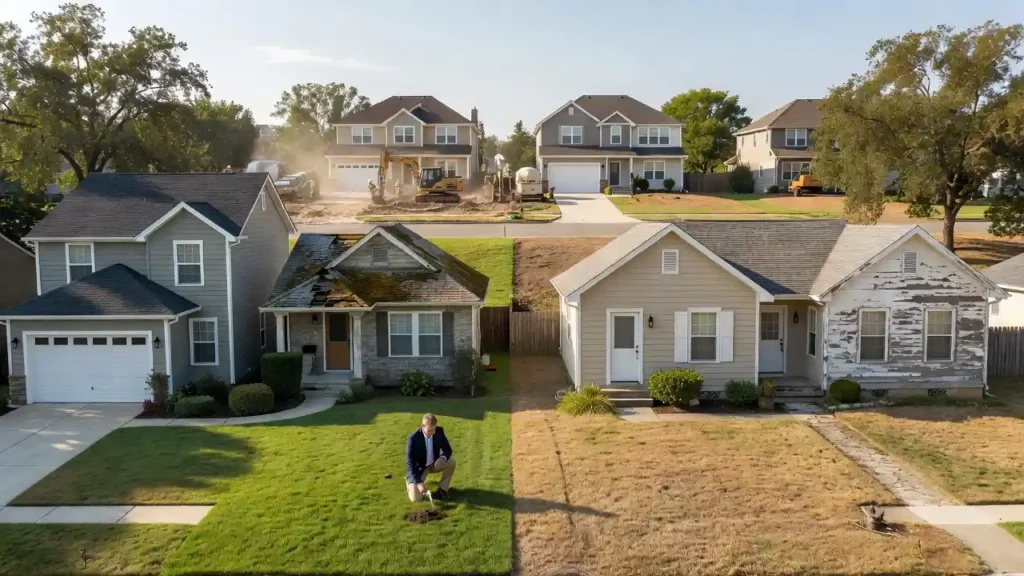
This one surprises most sellers. A well-kept home next to a neglected property can lose value it never earned back.
Appraisers note overgrown yards, peeling paint next door, and cars on blocks because these drag comparable appeal.
As Property Providers points out, the block sets the tone before the appraiser reaches your front door.
What you can do:
- Offer to help a neighbor with a quick cleanup before appraisal day.
- Time your listing when nearby yards look their best.
- Photograph your own curb appeal to anchor a strong first impression.
- Keep your driveway, walkway, and entry spotless.
Small gestures on your street can protect real dollars on your closing statement.
Factor 3: Cosmetic Condition and Deferred Maintenance
Appraisers separate cosmetic flaws from structural risk, but both count. A cracked ceiling, a dripping faucet, or a dated kitchen signals deferred maintenance, and that raises red flags. Appalachian Appraisal Services notes that visible upkeep shapes how an appraiser scores overall condition.
| Issue Type | Appraiser Read | Est. Fix Cost | Value Protected |
|---|---|---|---|
| Chipped paint, scuffs | Poor upkeep | $200 to $800 | $2K to $5K |
| Leaky faucet, running toilet | Deferred maintenance | $100 to $400 | $1K to $3K |
| Dated fixtures | Below-market finish | $500 to $2,500 | $3K to $8K |
| Cracked drywall | Possible structural flag | $300 to $1,200 | $4K to $10K+ |
| Worn flooring | Reduced condition score | $1,500 to $5,000 | $5K to $12K |
The math usually favors the fix. Low-cost repairs almost always return more than they cost at appraisal.
Factor 4: Timing and the Comparable Sales
Even a perfect home is judged against recent nearby sales. Appraisers pull comps from the last 3 to 6 months within about a mile.
A cooling market, a nearby distressed sale, or a slow season can pull your number down. FastExpert confirms that comparable selection carries heavy weight in the final report.
| Timing Element | Impact on Appraisal |
|---|---|
| Fresh, high comps nearby | Supports a strong value |
| Recent foreclosure sale | Drags comps lower |
| Off-season listing | Fewer active comps to cite |
| Rising market momentum | Room for upward adjustment |
| Stale 6-month-old comps | Weaker support for price |
Steps to strengthen your comp story:
- Gather 3 to 5 recent sales that match your home’s size and style.
- Note upgrades comps lack, such as a finished basement or new roof.
- Leave the appraiser a one-page fact sheet with these details.
- List when inventory is tight and buyer demand runs high.
A prepared file gives the appraiser reasons to hit your number.
Quick Comparison: Seller Control at a Glance
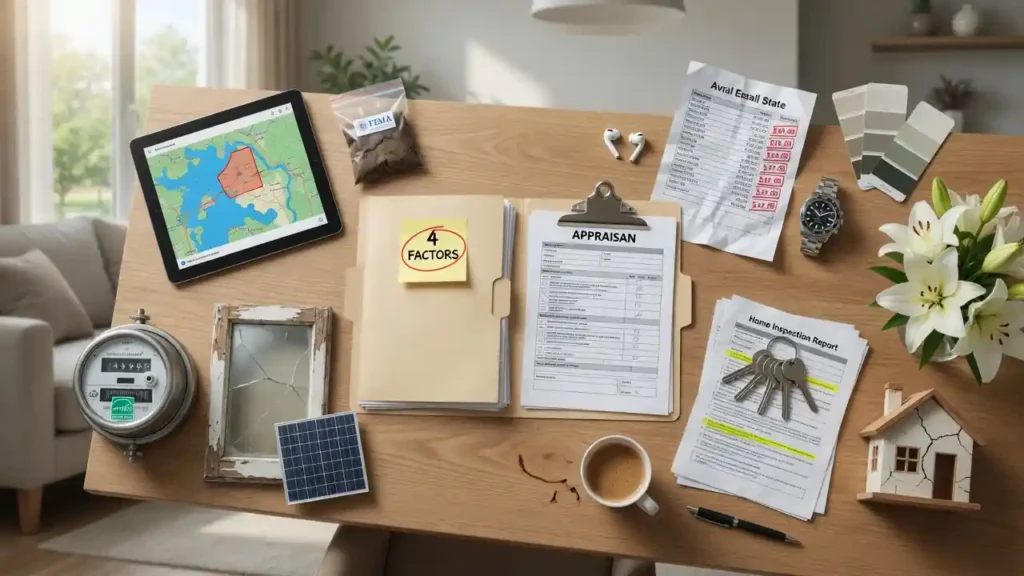
| Factor | Can You Control It? | Best Action |
|---|---|---|
| Location | No | Document the positives |
| Neighbors | Partly | Boost your own curb appeal |
| Cosmetic condition | Yes | Fix low-cost issues first |
| Timing and comps | Yes | List smart, supply strong comps |
Preparing for Appraisal Day
The 4 surprising factors that can affect a home appraisal reward sellers who plan ahead. Our team walks clients through a short prep list before the appraiser arrives.
- Complete cheap, visible repairs two weeks out.
- Clean deeply and clear clutter to show full square footage.
- Assemble a comps and upgrades sheet.
- Verify permits for past improvements.
- Be friendly, present, and ready to answer questions.
Preparation is the cheapest value protection you will ever buy.
FAQs
Can I dispute a low appraisal?
Yes. You can request a reconsideration of value with better comps or evidence of missed features. Success is not guaranteed, but strong documentation helps.
Do upgrades always raise the appraisal?
No. High-return upgrades like kitchens, roofs, and systems help most. Personal or over-improved features rarely return full cost.
How current must comps be?
Most lenders want sales from the last 3 to 6 months within about a mile.
Does a messy neighbor really matter?
It can. Appraisers factor block condition into overall appeal, so curb presentation on your street counts.
Which of the 4 surprising factors that can affect a home appraisal matters most?
It depends on your property, but comparable sales and condition usually carry the heaviest weight.
Protect Your Value Before the Appraiser Arrives
The right prep turns a nervous appraisal into a confident close. If you are buying, selling, or valuing property across Cook, Lake, DuPage, or McHenry Counties, the team at Chicagoland Business Broker can help you position your deal for its strongest possible number.
Reach out today for a straight-talk consultation built on real 2026 market data.