How 111 West Wacker Drive Chicago IL Shapes Business Deals and Valuation in the Loop
A riverfront address can change how buyers and lenders price a business before they open the financials. 111 West Wacker Drive Chicago IL sits at the center of that effect. It anchors a stretch of the Chicago River where luxury housing, Class A offices, and transit access set the tone for every deal nearby. If you own, buy, or sell a business in the Loop, this address shows how location turns into dollars on a purchase agreement.
Key Takeaways
- 111 West Wacker is home to OneEleven, a 60-story luxury rental tower with roughly 504 units, developed by Related Midwest on the stalled Waterview Tower frame and opened in 2014.
- Location supports value, but cash flow sets the price. Most Chicagoland small businesses trade at 2x to 3.5x Seller’s Discretionary Earnings (SDE), with lease terms and transferability moving the final number.
- SBA 7(a) loans fund up to $5 million for acquisitions. Expect a 10% equity injection on change-of-ownership deals and plan for Illinois bulk sales tax notices before closing.
What Is at 111 West Wacker Drive
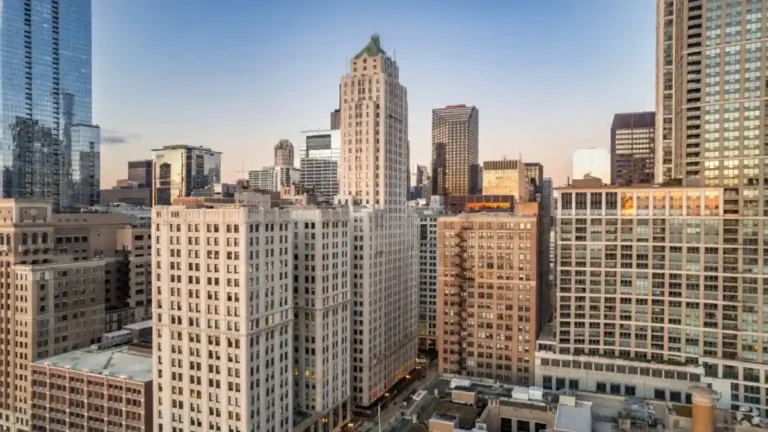
The building at this address is a residential high-rise, not an office tower. OneEleven rises 60 stories on Wacker Drive near Clark Street, facing the Chicago River in ZIP code 60601. That distinction matters for business owners who assume every Wacker address is office space.
The tower has a notable history. Construction began in the mid-2000s as Waterview Tower, a planned condo and hotel project. Work stopped in 2008 during the financial crisis, leaving a partial concrete frame. Related Midwest later acquired the site, and Goettsch Partners redesigned it as a rental tower that opened in 2014.
Building Snapshot
| Feature | Detail |
|---|---|
| Address | 111 W Wacker Dr, Chicago, IL 60601 |
| Current name | OneEleven |
| Use | Luxury rental apartments |
| Height | 60 stories |
| Approximate units | About 504 |
| Developer | Related Midwest |
| Architect (redesign) | Goettsch Partners |
| Opened | 2014 |
| Original project | Waterview Tower (halted in 2008) |
| Neighborhood | The Loop, riverfront |
Building Timeline
| Year | Milestone |
|---|---|
| Mid-2000s | Waterview Tower construction begins as a condo-hotel project |
| 2008 | Construction halts during the financial crisis |
| Early 2010s | Related Midwest acquires the site and redesigns it |
| 2014 | OneEleven opens as a luxury rental tower |
| 2020s | Tower operates within a Loop shifting toward residential use |
Our hands-on deal analysis suggests the Waterview story still resonates with Chicago investors. A stalled project became a stable, income-producing asset. That same turnaround logic applies to distressed businesses. Verify current ownership, unit count, and leasing details directly with building management before you rely on them in any deal model.
Why This Address Matters to Business Buyers and Sellers
111 West Wacker Drive Chicago IL is a signal of high-income density. Thousands of renters live within a few blocks, and many work in the Wacker Drive office corridor. For service businesses, restaurants, fitness studios, and healthcare practices, that density translates into customer traffic and pricing power.
Location drives three things in a business sale:
- Revenue stability. Dense, affluent foot traffic supports repeat customers.
- Buyer demand. More qualified buyers compete for businesses in strong locations.
- Lender comfort. Banks underwrite established locations with less hesitation.
Location Factors That Affect Business Value
| Factor | What Buyers Look For | Effect on Value |
|---|---|---|
| Transit access | CTA stations within a short walk | Raises customer and staff access |
| Resident income | High-income renters nearby | Supports premium pricing |
| Office density | Daytime workers on weekdays | Lifts lunch and service traffic |
| Lease terms | 5+ years remaining with renewal options | Protects transferable cash flow |
| Visibility | Street-level frontage | Improves walk-in sales |
| Competition | Number of similar businesses nearby | Can compress margins |
The building sits about two blocks from the Clark/Lake CTA station, which serves the Blue, Brown, Green, Orange, Pink, and Purple Lines. Few addresses in Chicago match that transit reach. Map your business’s distance to Clark/Lake before you set an asking price.
Chicago Office Market Context for 2026
The Loop office market is splitting into two tiers. Class A towers with modern amenities keep tenants, while older Class B and C buildings struggle with vacancy. Industry analysts call this the flight to quality (tenants consolidating into newer, better-located space).
Downtown Chicago office vacancy has stayed above 20% since 2023, according to major commercial brokerage reports. The Wacker Drive riverfront holds up better than most of the Loop. Towers like 150 North Riverside, 110 North Wacker, and 333 West Wacker continue to draw headquarters and professional firms.
Loop Office Market Snapshot
| Segment | Demand Trend | What It Means for Businesses |
|---|---|---|
| Trophy and Class A riverfront | Steady demand | Stable daytime customer base |
| Older Class B towers | Weak demand, rising vacancy | Lower rents for small firms |
| Class C buildings | Conversion candidates | Future residential growth |
| LaSalle Street corridor | Office-to-residential conversions | New residents, new service demand |
The Residential Shift in the Loop
The City of Chicago’s LaSalle Street Reimagined initiative supports converting aging office towers into apartments. More residents downtown means more evening and weekend spending. The area around 111 West Wacker Drive Chicago IL already shows what a residential Loop looks like, and conversions will extend that pattern south.
Chicagoland dealmakers are noting that businesses serving residents now sell faster than businesses that depend only on office workers. If you’ve been tracking Illinois business sales, this strategic move won’t come as a surprise. Review whether your revenue comes from residents, office workers, or both before you list.
Business Valuation Near Class A Addresses
A strong address raises value only when it shows up in the numbers. Buyers pay for verified cash flow, not for a nice view. At Chicagoland Business Broker, we personally visit every business that signs a listing agreement to conduct an on-site appraisal and arrive at fair market value.
Key Valuation Terms
- SDE (Seller’s Discretionary Earnings): Net profit plus the owner’s salary, benefits, and one-time expenses. Used for owner-operated businesses.
- EBITDA: Earnings before interest, taxes, depreciation, and amortization. Used for larger businesses with management teams.
- Multiple: The number applied to SDE or EBITDA to estimate price.
- Add-backs: Personal or one-time expenses added back to show true earnings.
Typical Valuation Multiples Our Team Sees in Chicagoland
| Business Type | Earnings Basis | Typical Multiple Range | Value Drivers |
|---|---|---|---|
| Restaurants and cafes | SDE | 1.5x to 2.5x | Lease length, liquor license, staff retention |
| Fitness studios | SDE | 2.0x to 3.0x | Recurring memberships, equipment condition |
| Professional services (CPA, insurance) | SDE | 2.5x to 3.5x | Client retention, recurring revenue |
| Dental practices | Collections or EBITDA | 60% to 80% of collections | Hygiene revenue, patient count, equipment |
| Medical and specialty practices | EBITDA | 3x to 5x | Payer mix, provider transition plan |
| Construction and trades | SDE or EBITDA | 2.5x to 4.0x | Backlog, licensing, key employees |
| Trucking and logistics | EBITDA | 3x to 4.5x | Contracts, fleet age, driver base |
These ranges reflect what our team observes in live Chicagoland deals. Your specific multiple depends on risk. Every business sits somewhere on the range based on the factors below.
What Moves Your Multiple Up or Down
| Raises the Multiple | Lowers the Multiple |
|---|---|
| 3+ years of clean financials | Cash-heavy or unreported revenue |
| Long, assignable lease | Lease ending within 2 years |
| Recurring revenue | One-time project revenue |
| Trained staff who will stay | Owner does all key work |
| Diverse customer base | One client over 20% of revenue |
| Prime transit-served location | Declining foot traffic |
How a Prime Location Shows Up in Value
- Higher revenue per square foot. Dense traffic lifts sales without added space.
- Lower customer acquisition cost. Walk-in traffic reduces marketing spend.
- Faster sale timeline. More buyers compete for strong locations.
- Better financing terms. Lenders view established downtown sites as lower risk.
Our hands-on deal analysis suggests that a business near 111 West Wacker Drive Chicago IL with a long lease can command the top of its multiple range. The same business with a lease expiring in 18 months may sell at the bottom. Request a lease review before you request a valuation.
Deal Structuring: Asset vs. Stock Purchase
Most small business sales close as asset purchases. The buyer acquires specific assets (equipment, inventory, customer lists, goodwill) and leaves behind the seller’s liabilities. A stock purchase transfers the entire legal entity, including its history.
Asset vs. Stock Purchase Comparison
| Factor | Asset Purchase | Stock Purchase |
|---|---|---|
| What transfers | Selected assets only | Entire company, including liabilities |
| Liability risk for buyer | Low; seller keeps most liabilities | High; buyer inherits past issues |
| Tax benefit for buyer | Stepped-up basis; new depreciation | No step-up; inherits old basis |
| Tax treatment for seller | Mix of capital gains and ordinary income | Usually all capital gains |
| Contracts and leases | Must be assigned; landlord consent needed | Usually stay in place |
| Licenses and permits | Often must be reissued | Typically remain with entity |
| Common in | Most deals under $5 million | Larger deals, regulated businesses |
| SBA lender preference | Strongly preferred | Allowed with extra diligence |
Deal Structuring Alternatives
- All-cash purchase: Fastest close; rare in small business deals.
- SBA-financed purchase: Most common for buyers with 10% or more to inject.
- Seller financing: The seller carries a note, often 10% to 30% of the price.
- Earnout: Part of the price depends on future performance.
- Partial buyout: The buyer acquires a share now and the rest later.
- Real estate plus business: Our Illinois Managing Broker License lets us handle both in one transaction.
How 111 West Wacker Drive Chicago IL Shapes Business Deals and Valuation in the Loop 111 West Wacker Drive Chicago IL sits at the center of that effect. It anchors a stretch… @ChicagoBlackBus @ChicagoREALTORS @ChooseChicago https://t.co/6FhbbohLhO
— Chicagoland Business Broker (@chicagoland55) November 3, 2026
Illinois-Specific Closing Requirements
| Requirement | Agency | Why It Matters |
|---|---|---|
| Bulk sales notice (Form CBS-1) | Illinois Department of Revenue | Filed at least 10 business days before closing; protects buyer from seller’s unpaid taxes |
| Unemployment tax notice | Illinois Department of Employment Security | Prevents buyer liability for seller’s unpaid contributions |
| Real estate licensing | Illinois Department of Financial and Professional Regulation | Governs licensed brokers handling property in a deal |
| Liquor license transfer | City of Chicago and Illinois Liquor Control Commission | New owner must apply; cannot simply assume |
Skipping the bulk sales notice is one of the costliest mistakes we see. The buyer can become liable for the seller’s unpaid Illinois taxes. Add Form CBS-1 to your closing checklist the day you sign a letter of intent.
Buyer and Seller Responsibilities
Every deal moves faster when both sides know their jobs. We represent either the buyer or the seller, and we bring in experienced accountants and attorneys to keep the process on track.

Buyer vs. Seller Responsibilities
| Stage | Buyer Responsibilities | Seller Responsibilities |
|---|---|---|
| Preparation | Secure lender pre-qualification and proof of funds | Organize 3 years of tax returns and financials |
| Valuation | Review the appraisal and comparable sales | Commission an on-site appraisal |
| Offer | Submit a letter of intent with terms | Respond, counter, and negotiate |
| Due diligence | Verify revenue, contracts, lease, and staff | Provide documents promptly and accurately |
| Financing | Complete the SBA or bank application | Supply records the lender requests |
| Lease | Negotiate assignment or a new lease | Request landlord consent |
| Closing | Sign loan documents and fund equity | Deliver assets, keys, and transition support |
| Transition | Retain staff and customers | Train the buyer for the agreed period |
Steps to Prepare Your Business for Sale
- Get a professional appraisal. Know your fair market value before you set a price.
- Clean up your financials. Separate personal and business expenses.
- Document add-backs. List every one-time or personal expense with proof.
- Review your lease. Confirm length, renewal options, and assignment terms.
- Reduce owner dependence. Train a manager to run daily operations.
- Fix visible issues. Repair equipment and refresh the space.
- Gather key documents. Compile contracts, licenses, and employee records.
- Plan your exit timeline. Decide how long you will stay for training.
Steps for Buyers Evaluating a Loop Business
- Define your criteria. Set industry, size, and price range.
- Get pre-qualified. Talk to an SBA lender before you make offers.
- Visit at different times. Watch traffic on weekdays, nights, and weekends.
- Verify the numbers. Match tax returns to bank deposits.
- Study the lease. Confirm rent escalations and remaining term.
- Interview key staff. Learn who drives revenue and who might leave.
- Plan the first 90 days. Map how you will keep customers through the change.
At Chicagoland Business Broker, any money spent on an appraisal goes 100% toward the commission. Call (224) 458-9288 to schedule an on-site appraisal before you list.
SBA Financing for Chicagoland Acquisitions
The SBA 7(a) loan is the most common way to buy a small business. The U.S. Small Business Administration guarantees part of the loan, which lets banks lend with less collateral. Details on current programs are available through the SBA 7(a) loan program.
Business loans have proven to be a low-risk investment for lenders. Credit ratings do not have to be perfect to be considered. Most qualified buyers can secure financing with the right preparation.
SBA Loan Program Comparison
| Feature | SBA 7(a) | SBA 504 |
|---|---|---|
| Best use | Business acquisitions, working capital | Real estate and major equipment |
| Maximum loan | $5 million | Typically $5 million to $5.5 million (SBA portion) |
| Typical term | Up to 10 years (business); up to 25 years (real estate) | 10, 20, or 25 years |
| Down payment | Typically 10% minimum on change of ownership | Typically 10% to 20% |
| Goodwill financing | Yes | No |
| Rate type | Variable or fixed | Fixed on SBA portion |
SBA Equity Injection Rules
| Item | Guideline |
|---|---|
| Minimum equity injection | 10% of total project cost on change-of-ownership deals |
| Seller note as equity | Can count toward part of the injection only under strict standby terms |
| Personal guarantee | Required from owners of 20% or more |
| Collateral | Lender takes available business and personal assets |
| Debt service coverage | Lenders typically look for 1.25x or higher |
Sample SBA Deal Structure
| Line Item | Amount |
|---|---|
| Purchase price | $1,000,000 |
| Working capital and closing costs | $100,000 |
| Total project cost | $1,100,000 |
| Buyer cash injection (10%) | $110,000 |
| SBA 7(a) loan | $990,000 |
| Estimated term | 10 years |
Financing Steps for Buyers
- Gather personal financials. Prepare tax returns, a personal financial statement, and a resume.
- Request the seller’s records. Lenders need 3 years of business tax returns.
- Choose an SBA Preferred Lender. Preferred lenders approve loans faster.
- Submit the application. Include the purchase agreement and business plan.
- Complete the business valuation. Lenders require an independent valuation on many deals.
- Close and fund. Sign documents and transfer ownership.
Once a buyer is found, we assist in negotiating loan terms and assemble the paperwork needed for closing. The International Business Brokers Association publishes quarterly market data on how financing affects deal flow. Ask your lender for a term sheet before you sign a letter of intent.
Residential Market Context: Workforce and Relocation
Housing costs shape where your employees live and what they expect to earn. Buyers relocating to Chicago to run a business need housing too. We pulled current rent data from four Chicago apartment communities to show the range.
The residential density around 111 West Wacker Drive Chicago IL reflects a citywide trend: renters pay a premium for transit, amenities, and walkability. Those same renters are your customers and your workforce.
Chicago Rental Communities at a Glance
| Community | Address | Neighborhood | Unit Types | Size Range |
|---|---|---|---|---|
| Eleven40 | 1140 S Wabash Ave | South Loop | Studio to 2BR | 380 to 1,030 sq ft |
| The Lydian | 513 S Damen Ave | Illinois Medical District | Studio to 3BR | 446 to 1,234 sq ft |
| Lakeview 3200 | 3218 N Clark St | Lakeview | Studio to 2BR | 436 to 1,304 sq ft |
| Twin Towers | 1649 E 50th St | Hyde Park | Studio to 3BR | 416 to 1,003 sq ft |
Starting Rents by Unit Type
| Unit Type | Eleven40 (South Loop) | The Lydian (Medical District) | Chicago City Average |
|---|---|---|---|
| Studio | From $1,947 | From $2,383 | $2,024 |
| 1 Bedroom | From $2,399 | From $2,564 | $2,481 |
| 2 Bedroom | From $3,535 | From $3,578 | $3,054 |
| 3 Bedroom | Not offered | Call for pricing | $3,699 |
City averages come from ApartmentHomeLiving.com’s 2026 comparison of more than 31,000 Chicago communities.
South Loop vs. Citywide Rent Comparison
| Unit Type | South Loop Average | Chicago Average | Difference |
|---|---|---|---|
| Studio | $2,424 | $2,024 | +$400 |
| 1 Bedroom | $2,899 | $2,481 | +$418 |
| 2 Bedroom | $3,934 | $3,054 | +$880 |
Downtown-adjacent neighborhoods carry a clear premium. A two-bedroom in the South Loop averages nearly $900 more per month than the city average. Riverfront Loop towers like OneEleven typically price above South Loop levels, so confirm current rates with the leasing office.
Move-In and Monthly Fees
| Fee | Eleven40 | The Lydian |
|---|---|---|
| Application fee | $60 per applicant | $65 per applicant |
| Admin fee | $500 | $500 |
| Move-in fee | Not listed | $299 to $499 |
| Parking | $300 to $375 per month | $350 to $375 per month |
| Utility and tech package | Not listed | $188 to $263 per month |
| Pet fees | $300 (cat), $500 (dog) | $350 fee plus $30 monthly rent |
Amenities and Access Highlights
| Community | Notable Features | Transit Access |
|---|---|---|
| Eleven40 | 26 stories, 320 units, pool, rooftop cabanas, built 2018 | Roosevelt CTA station 0.1 miles; transit score 100/100 |
| The Lydian | Furnished units, managed by Marquette | Illinois Medical District access |
| Lakeview 3200 | Target on ground floor, in-unit washer/dryer, 24-hour fitness | Bus stop and subway nearby at Clark and Belmont |
| Twin Towers | Lake and park views, business center, near UChicago | Hyde Park Metra station within walking distance |
What Rent Data Means for Your Deal
- Wage pressure. Staff living near downtown need higher pay to cover rent.
- Relocation budgets. Out-of-state buyers should budget $2,400 to $3,600 monthly for housing.
- Furnished options. Units like The Lydian’s furnished studio at $2,600 suit buyers in transition.
- Customer spending. High-rent neighborhoods signal disposable income for local businesses.
Factor local rent levels into your payroll projections before you finalize a purchase price.
Healthcare Practice Sales Near Downtown Medical Hubs
Healthcare practices follow patients and providers. Chicago’s major medical hubs include Northwestern Memorial in Streeterville, Rush and the Illinois Medical District on the Near West Side, and the University of Chicago Medical Center in Hyde Park.
Our founder, Dr. Robert A. Uhland, purchased the dental practice at Rush Hospital and later relocated it to Michigan Avenue. He then served Northbrook patients for 25 years with his orthodontic practice. That firsthand experience shapes how we value practices today.
What Drives Healthcare Practice Value
| Factor | Why It Matters |
|---|---|
| Active patient count | Shows the size of transferable goodwill |
| Payer mix | Insurance versus private pay affects margins |
| Hygiene or recurring revenue | Predictable income supports higher value |
| Provider transition plan | Patients stay when the seller introduces the buyer |
| Equipment age | Older equipment lowers value |
| Lease and location | Proximity to hospitals and transit attracts patients |
Steps to Sell a Healthcare Practice
- Get a practice appraisal. Use an appraiser with healthcare experience.
- Clean up patient records. Confirm active patient counts.
- Plan the transition period. Most sellers stay 3 to 12 months.
- Review non-compete terms. Define reasonable distance and duration.
- Coordinate credentialing. Buyers need insurance panel approval before closing.
Professionals living near 111 West Wacker Drive Chicago IL and nearby residential towers form a strong patient base for downtown practices. Ask your appraiser to break out revenue by patient ZIP code before you go to market.
Pros and Cons of Buying a Business Near the Riverfront Loop
A downtown business near the river offers real advantages and real costs. Weigh both before you commit.
Pros
- Dense, high-income customer base from residents and office workers.
- Exceptional transit access through Clark/Lake and nearby stations.
- Strong buyer demand when you eventually sell.
- Growing residential population from office conversions.
- Lender familiarity with established downtown locations.
Cons
- Higher commercial rents than suburban locations.
- Parking costs for staff and customers.
- Office vacancy can reduce weekday traffic in some blocks.
- Higher wages needed to attract staff.
- Seasonal swings tied to tourism and weather.
Downtown vs. Suburban Business Comparison
| Factor | Riverfront Loop | Suburban Cook, Lake, DuPage, McHenry |
|---|---|---|
| Rent per square foot | Higher | Lower |
| Foot traffic | Very high | Moderate; car-dependent |
| Labor costs | Higher | Moderate |
| Parking | Limited and costly | Usually free |
| Customer income | High | Varies by town |
| Buyer pool | Large | Large and growing |
At Chicagoland Business Broker, we serve buyers and sellers across Cook, Lake, DuPage, and McHenry Counties. Compare a downtown and a suburban listing side by side before you narrow your search.
How Chicagoland Business Broker Supports Your Deal
We are the only full-service business brokerage in Chicagoland owned and operated by a business owner and healthcare professional. That combination shapes every transaction we handle.
Our Services
| Service | What You Get |
|---|---|
| Seller representation | Pricing analysis, marketing, and buyer screening |
| Buyer representation | Price negotiation, structuring guidance, and closing support |
| On-site business appraisals | A broker visits your business to set fair market value |
| Loan negotiation support | Help securing fair rates and timely funding |
| Real estate integration | Illinois Managing Broker License for property sales |
| Professional team | Experienced accountants and attorneys on every deal |
Why Appraisals Matter
- Financing. Lenders need a supportable value to fund the closing.
- Estate planning. Advisors need a value to build a plan.
- Combining practices. Each owner’s share depends on individual value.
- Buy/sell agreements. Partners need a value to set terms.
Call Robert directly at (224) 458-9288 to book your on-site appraisal this quarter.
Frequently Asked Questions
What is at 111 West Wacker Drive Chicago IL?
The address is home to OneEleven, a 60-story luxury rental tower with roughly 504 units. Related Midwest developed it on the frame of the stalled Waterview Tower, and it opened in 2014.
Is 111 West Wacker an office building?
No. It is a residential tower. The surrounding Wacker Drive corridor includes major Class A office buildings.
Does a prime location increase my business’s value?
Yes, when it shows up in cash flow. Buyers pay for verified earnings. A strong location supports higher revenue and a higher multiple.
What multiple will my business sell for?
Most Chicagoland small businesses sell for 2x to 3.5x SDE. Healthcare and larger businesses use different methods. An on-site appraisal sets your specific value.
Should I choose an asset or stock purchase?
Most small deals close as asset purchases. Buyers get liability protection and tax benefits. Stock purchases fit larger or heavily licensed businesses.
How much do I need to buy a business with an SBA loan?
Plan for a 10% equity injection on most change-of-ownership deals. A $1 million purchase with $100,000 in costs needs about $110,000 in cash.
What is the Illinois bulk sales notice?
It is Form CBS-1, filed with the Illinois Department of Revenue at least 10 business days before closing. It protects buyers from inheriting the seller’s unpaid state taxes.
How do downtown rents affect my business?
Higher rents raise wage expectations for staff. They also signal a customer base with more disposable income.
Do you charge separately for appraisals?
No. Any money spent on an appraisal goes 100% toward the commission.
Which areas do you serve?
We serve Cook, Lake, DuPage, and McHenry Counties, including downtown Chicago.
Next Steps for Buyers and Sellers
Location sets the stage, and cash flow closes the deal. The riverfront Loop around 111 West Wacker shows how density, transit, and residential growth support business value. Clean financials, a strong lease, and the right financing turn that potential into a closed sale.
Use this checklist before you act:
- Get an on-site appraisal to set fair market value.
- Review your lease for term, renewals, and assignment rights.
- Pre-qualify with an SBA lender if you are buying.
- File Illinois bulk sales notices on time.
- Compare local rents to plan payroll and relocation costs.